
Anne Heche was an American actress, director, author, and advocate whose life contained more courage, contradiction, pain, and achievement than most people accumulate across several lifetimes. Born May 25, 1969, in Aurora, Ohio, she rose from a childhood defined by profound trauma to become one of Hollywood’s most sought-after actresses of the late 1990s — only to lose a multi-million-dollar studio career for the audacity of loving a woman publicly at a time when Hollywood was not ready for it. She rebuilt. She always rebuilt. She died on August 11, 2022, aged 53, nine days after a catastrophic car crash in Mar Vista, Los Angeles — and left behind two sons, two memoirs, a filmography that spans three decades, and a cultural legacy that the entertainment industry is still reckoning with.
Anne Heche was many things the headlines rarely captured fully — a Daytime Emmy winner, a Tony Award nominee, a survivor of childhood sexual abuse, a mental health advocate who spoke openly about her own struggles at a time when doing so carried enormous professional risk, and a mother whose children describe her with the kind of love that no public narrative can diminish. This is her complete story.
Anne Heche — Quick Facts
| Detail | Information |
|---|---|
| Full Name | Anne Celeste Heche |
| Date of Birth | May 25, 1969 |
| Birthplace | Aurora, Ohio, USA |
| Date of Death | August 11, 2022 |
| Cause of Death | Inhalation and thermal injuries; sternal fracture following car crash |
| Age at Death | 53 |
| Nationality | American |
| Profession | Actress, director, author, producer |
| Known For | Another World, Donnie Brasco, Six Days Seven Nights, Men in Trees |
| First Marriage | Coleman Laffoon (2001–2009) |
| Partner | James Tupper (2007–2018) |
| Children | Homer Heche Laffoon (b. 2002), Atlas Heche Tupper (b. 2009) |
| Awards | Daytime Emmy, Soap Opera Digest Award, Tony nomination |
| Memoirs | Call Me Crazy (2001), Call Me Anne (2023, posthumous) |
Early Life — A Childhood That Would Have Broken Most People
Anne Heche grew up as the youngest of five children in a household that looked ordinary from the outside and was anything but.
Her father, Donald Heche, was a Baptist choir director and a closeted gay man who sexually abused Anne throughout her childhood. Her mother, Nancy Heche, was a homemaker who later became estranged from Anne — a painful distance that Anne documented honestly in her memoirs.
The family moved constantly — through Ohio, New Jersey, and briefly into an Amish community — never settling long enough to build the kind of stable community connections that might have provided some counterweight to what was happening at home.
Two losses in rapid succession shattered what remained of her childhood stability:
- 1983: Her father Donald died of AIDS — Anne was 13 years old
- 1983: Three months later, her brother Nathan was killed in a car accident
The family relocated to Chicago, where Anne attended Francis W. Parker School. It was there that a talent agent spotted her in a school production — the first indication that the world outside her family might have something different to offer her.
Another World — Where It All Began
Anne did not wait for Hollywood to come to her. She auditioned for As the World Turns while still a teenager. Her mother refused to allow it. She found another way.
She landed a role on Another World — NBC’s long-running daytime drama — and played the dual role of twins Vicky Hudson and Marley Love from 1987 to 1991.
What those four years gave her:
- Daytime Emmy Award for Outstanding Younger Actress (1991)
- Soap Opera Digest Award for Outstanding Lead Actress
- The discipline of performing five days a week, year-round
- The range that comes from playing two distinct characters simultaneously
- The professional reputation that opened Hollywood’s door
It was not a glamorous start. It was a serious one — which served her far better in the long run.
Hollywood Breakthrough — The Year Everything Happened at Once
Anne’s film career built slowly through the early 1990s with modest roles. Then 1997 arrived and changed everything simultaneously.
1997 Filmography — An Extraordinary Single Year
| Film | Co-Stars | Her Role | Achievement |
|---|---|---|---|
| Donnie Brasco | Al Pacino, Johnny Depp | Maggie Pistone | National Board of Review — Best Supporting Actress |
| Volcano | Tommy Lee Jones | Dr. Amy Barnes | Major studio action lead |
| I Know What You Did Last Summer | Jennifer Love Hewitt | Melissa Egan | Horror breakout |
| Wag the Dog | Dustin Hoffman, Robert De Niro | Winifred Ames | Critical acclaim |
By the end of 1997 she had a multi-million-dollar studio deal and was considered one of the most commercially valuable actresses in Hollywood.
In 1998 she starred opposite Harrison Ford in Six Days, Seven Nights — a film whose production and release would become complicated in ways that had nothing to do with the movie itself.
The Ellen DeGeneres Relationship — A Cultural Earthquake
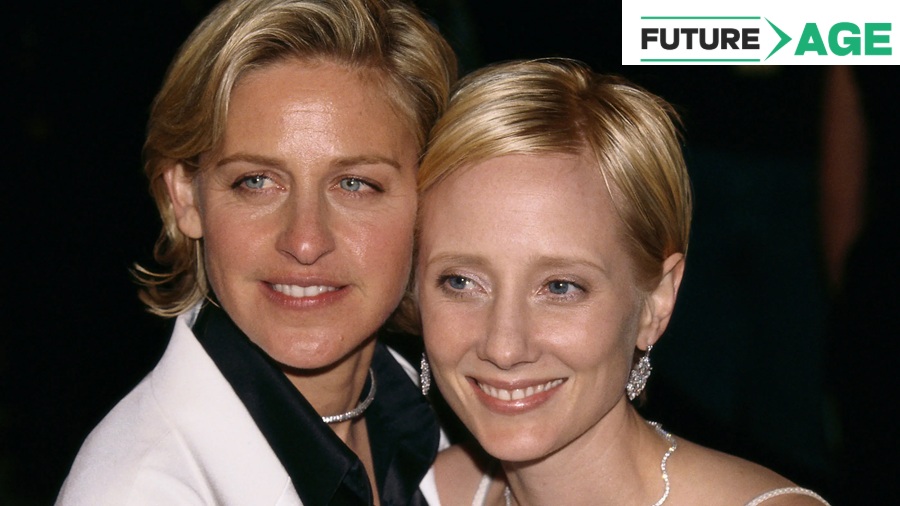
In 1997 Anne Heche met Ellen DeGeneres at the Vanity Fair Oscar party.
What followed was one of the most discussed relationships in American entertainment history — not because of who they were to each other privately, but because of what their public relationship meant to the culture around them.
The impact, clearly:
- Described by The Advocate as “the first gay supercouple”
- They attended premieres together, gave interviews together, lived openly together
- No major celebrity couple had done this before at this visibility level
- The response from Hollywood was swift and concrete
What Anne lost professionally:
- Her multi-million-dollar studio deal was terminated
- She did not appear in a major studio film for approximately ten years
- Her agents dropped her
- Studios that had competed for her were suddenly unavailable
She later said she was told plainly that if she attended the Six Days, Seven Nights premiere with Ellen, her career in studio films was over. She attended anyway.
The relationship lasted three and a half years, ending in 2000. The personal cost of the split, combined with the professional destruction that had accompanied the relationship itself, produced a crisis.
The Fresno incident (2000): Following the breakup, Anne was found wandering in a stranger’s rural home near Fresno, California — disoriented, wearing only lingerie, asking the family if they were going to take her to a spaceship. She was hospitalized briefly. She later spoke about this episode with extraordinary honesty, describing a constructed inner world that had been her psychological survival mechanism since childhood.
Personal Life Timeline
| Year | Event | Significance |
|---|---|---|
| 1997 | Meets Ellen DeGeneres at Vanity Fair Oscar party | Begins relationship that transforms both careers |
| 1997 | Studio deal terminated | Direct professional consequence of public relationship |
| 2000 | Ellen relationship ends | Personal crisis follows; Fresno incident occurs |
| 2001 | Publishes Call Me Crazy | Reveals father’s abuse, mental health struggles |
| 2001 | Marries Coleman Laffoon | September 1; seeks stability |
| 2002 | Son Homer Heche Laffoon born | March; Coleman describes fatherhood as transformative |
| 2006 | Begins Men in Trees | Meets James Tupper on set |
| 2007 | Coleman files for divorce | February; cites irreconcilable differences |
| 2007 | Begins relationship with James Tupper | “Eternally engaged” — never formally married |
| 2009 | Son Atlas Heche Tupper born | March 7 |
| 2009 | Divorce from Coleman finalized | March |
| 2018 | Tupper relationship ends | After eleven years |
| 2020 | Dancing with the Stars | Public return to mainstream visibility |
| 2022 | Death | August 11; nine days after car crash |
Marriage to Coleman Laffoon
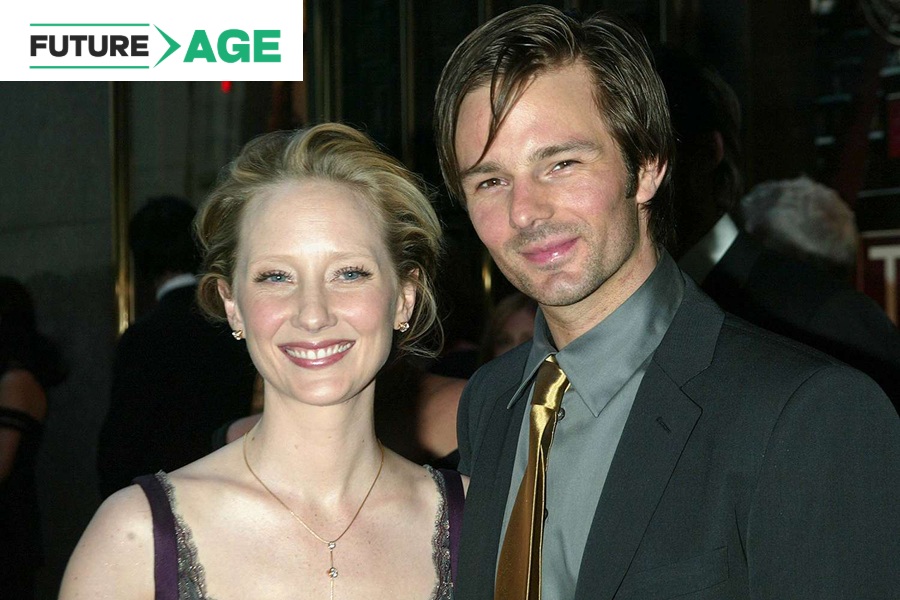
Anne met Coleman Laffoon while he was working as a cameraman on an Ellen DeGeneres documentary tour. Their connection developed through 2000 and into 2001.
Key facts:
- Married September 1, 2001 — intimate ceremony
- Son Homer Heche Laffoon born March 2002
- Coleman filed for divorce February 2007
- Divorce finalized March 2009
- Settlement: $515,000 to Coleman, $3,700/month child support, 50-50 custody
The marriage represented Anne’s attempt to build the kind of stable, private life that her childhood had never provided. For a few years it worked. When it ended, Coleman handled it with a dignity that Anne acknowledged and that has characterized his relationship with Homer ever since.
Men in Trees, James Tupper, and Atlas
Men in Trees was Anne’s television comeback — an ABC drama in which she played Marin Frist, a relationship coach who finds herself stranded in a small Alaskan town.
The show ran 2006–2008 and served two purposes:
- It rebuilt her mainstream audience credibility
- It introduced her to James Tupper, her co-star and partner for the next eleven years
Their relationship produced son Atlas Heche Tupper, born March 7, 2009. They described themselves as “eternally engaged” — deeply committed without formalizing the relationship legally. The relationship ended in 2018, and the legal disputes that followed Anne’s death — including Tupper’s contested claim to administer her estate — added a painful postscript to what had been a long partnership.
Television Career
Anne’s television work represents the most sustained and arguably most artistically consistent chapter of her career.
| Show | Network | Years | Role | Notes |
|---|---|---|---|---|
| Another World | NBC | 1987–1991 | Vicky Hudson / Marley Love | Daytime Emmy winner |
| Men in Trees | ABC | 2006–2008 | Marin Frist | Career television comeback |
| Hung | HBO | 2009–2011 | Lenore / Tanya | Critical acclaim |
| Save Me | NBC | 2013 | Beth Harper | Short-lived but praised |
| Aftermath | Syfy | 2016 | Karen Copeland | Genre work |
| The Brave | NBC | 2017–2018 | Patricia Campbell | Action drama |
| Chicago P.D. | NBC | Recurring | — | Dick Wolf franchise |
| Dancing with the Stars | ABC | 2020 | Herself | Public visibility revival |
| All Rise | CBS | 2021–2022 | Judge Benner | Final regular television role |
Theater — Broadway Proved She Could Do Everything
Anne’s stage work is the least discussed chapter of her career and among the most impressive.
Broadway highlights:
- Proof — played the complex lead role to critical acclaim
- Twentieth Century (2004 revival) — earned a Tony Award nomination for Best Actress in a Play
The Tony nomination arrived during a period when her film career was effectively blacklisted. Broadway gave her a stage — literally — that Hollywood had temporarily closed off. She used it with everything she had.
Anne Heche as Author
Anne wrote with the same courage she brought to her public life — which is to say, without protective distance.
Call Me Crazy (2001)
| Detail | Information |
|---|---|
| Published | 2001 |
| Subject | Father’s sexual abuse, mental illness, Hollywood career, Ellen relationship |
| Reception | Larry King called it one of the most honest showbusiness books ever written |
| Significance | Spoke openly about trauma and mental health before either was widely discussed |
Call Me Anne (2023)
| Detail | Information |
|---|---|
| Published | January 2023 — posthumously |
| Subject | Later life, relationships, mental health journey, career resurgence |
| Significance | Final personal statement — submitted in manuscript before her death |
The two books together form a complete portrait of a person who refused to let other people tell her story.
Mental Health — The Honest Story
Anne’s mental health journey is inseparable from her life story and deserves to be told without the sensationalism that often surrounded it.
The documented reality:
- Childhood sexual abuse by her father produced profound, lasting psychological trauma
- She developed what she described as an alter ego named “Celestia” — a constructed inner identity that served as psychological protection during her most traumatic years
- She was diagnosed with a form of dissociative disorder related to her trauma history
- The Fresno incident in 2000 was the most public manifestation of a struggle she had been managing privately for years
- Her 2001 Barbara Walters interview — which Walters later described as the strangest interview she ever conducted — revealed someone navigating the boundary between her constructed inner world and external reality in real time
What she did with all of it:
She wrote about it. She spoke about it. She used her platform to advocate for mental health awareness before it was fashionable or safe to do so. She paid professional costs for her honesty that quieter people avoided by staying silent. She spoke anyway.
Awards and Recognition
| Award | Category | Year | Work |
|---|---|---|---|
| Daytime Emmy Award | Outstanding Younger Actress in a Drama Series | 1991 | Another World |
| Soap Opera Digest Award | Outstanding Lead Actress | Multiple | Another World |
| National Board of Review | Best Supporting Actress | 1997 | Donnie Brasco |
| Tony Award Nomination | Best Actress in a Play | 2004 | Twentieth Century |
| Saturn Award Nomination | Best Supporting Actress | 1998 | Wag the Dog |
The Car Crash and Death — August 2022
The sequence of events on August 5, 2022 unfolded in a way that would define how the world processed the end of Anne Heche’s life.
The timeline:
| Time | Event |
|---|---|
| ~10:55 AM | Mini Cooper crashes into Mar Vista apartment garage — Anne drives away |
| ~11:10 AM | Car crashes at high speed into residential home on Walgrove Avenue |
| Immediately after | Vehicle and house catch fire — Anne trapped inside |
| Minutes later | Firefighters and bystanders drag Anne from wreckage |
| Same day | Rushed to Grossman Burn Center at West Hills Hospital |
| August 11 | Declared legally brain dead |
| August 14 | Taken off life support to facilitate organ donation |
Cause of death: Inhalation and thermal injuries; sternal fracture
Toxicology findings:
- No active illegal drugs present in system at time of crash
- An inactive cocaine metabolite — indicating past use, not use at the time of the crash
- Fentanyl and benzodiazepine detected — consistent with medication administered during hospital treatment
Hospital staff conducted an honor walk as Anne was taken to the organ donation procedure — a mark of respect that said something true about how those who cared for her in her final days felt about the person they had tended.
The Aftermath — Homer, Estate, and Legacy
Anne died without a will — a circumstance that created legal complexity her children had to navigate while simultaneously grieving.
Key post-death events:
| Event | Date | Details |
|---|---|---|
| Homer petitions to administer estate | September 2022 | Filed as eldest child |
| James Tupper counter-petition | October 2022 | Claimed email constituted Anne’s will |
| Homer appointed general administrator | November 2022 | Court sides with Homer |
| Estate debt revealed | Early 2024 | Approximately $6 million in outstanding debt |
| Call Me Anne published | January 2023 | Posthumous memoir released |
Homer’s statement after her death:
“I am left with a deep, wordless sadness.”
Coleman Laffoon’s Instagram tribute:
He held a photograph of Anne holding baby Homer. He spoke with grief and without bitterness. He honored what was real about her and said goodbye with grace.
Anne Heche’s Cultural Legacy
Anne Heche’s significance extends well beyond her filmography — though the filmography alone would justify serious attention.
What she actually did:
She and Ellen DeGeneres demonstrated, at a moment when it carried concrete professional consequences, that a same-sex couple could live publicly and with dignity in the full glare of Hollywood attention. Every actor, musician, and public figure who has come out since without losing their career is standing, at least partially, on ground that Anne Heche helped break open — at personal cost she paid without complaint and without retreat.
She wrote honestly about childhood sexual abuse before the cultural conversation around it existed in anything like its current form. She spoke openly about mental illness when doing so was still professionally dangerous. She survived a Hollywood blacklist and rebuilt a career through theater, television, and sheer professional resilience.
Her sons:
Homer Heche Laffoon — now 24 — has spoken about his mother with love, complexity, and the kind of mature understanding that suggests she gave him something real to hold onto despite everything.
Atlas Heche Tupper — now 16 — carries her name forward in the most literal sense.
Her books:
Two memoirs that together constitute one of the more honest self-portraits in modern American entertainment writing. They were not written to manage a reputation. They were written to tell the truth about a life — which is rarer than it sounds.
Conclusion
Anne Heche was not the sum of her headlines. She was not the Fresno incident or the divorce proceedings or the car crash. She was a woman who survived a childhood that would have justified a lifetime of silence — and chose instead to be loud, public, honest, and present in everything she did.
She made extraordinary art. She loved people with full commitment. She paid professional prices for personal courage that most people would not have had the nerve to display. She fell and she got up, repeatedly, across five decades of a life that never became simple or easy but never stopped being fully, unmistakably hers.
Anne Heche deserved more time. What she did with the time she had was remarkable.
