
There is a particular kind of courage that the entertainment world rarely celebrates — the courage to walk away from something that is working. Not because it has gone wrong, not because you were pushed out, but because you know, with quiet certainty, that you have grown beyond it and that staying would mean choosing comfort over truth. Graham Wardle made that choice in 2022 when he left Heartland — the CBC drama he had anchored for fifteen seasons — and stepped into a life built around photography, filmmaking, spirituality, and the kind of intentional living that most people talk about and very few actually pursue. The fans grieved the loss of Ty Borden. But the man who played him was already somewhere else entirely — and what he has built in the years since is its own kind of story.
For readers looking for a quick answer — Graham Wardle is a Canadian actor, photographer, filmmaker, and motivational speaker born on September 6, 1986, in Qualicum Beach, British Columbia. He is best known for playing Ty Borden in the CBC drama Heartland — one of Canada’s longest-running and most beloved television series — across fifteen seasons from 2007 to 2022. He left the show in Season 14 when his character was killed off, and has since built a second career around photography, independent filmmaking, and spiritual growth advocacy. He is married to Allison Wardle and continues to build a creative life on his own terms.
Quick Facts
| Field | Details |
|---|---|
| Full Name | Graham Wardle |
| Born | September 6, 1986 |
| Birthplace | Qualicum Beach, British Columbia, Canada |
| Nationality | Canadian |
| Occupation | Actor, Photographer, Filmmaker, Speaker |
| Known For | Ty Borden — Heartland (CBC) |
| Heartland Seasons | Seasons 1–14 (2007–2021) |
| Left Show | Season 14 — Ty Borden killed off |
| Spouse | Allison Wardle (m. 2015) |
| Current Focus | Photography, Filmmaking, Spirituality |
| Active Years | 2002 – Present |
Early Life: Qualicum Beach, British Columbia
Graham Wardle was born on September 6, 1986, in Qualicum Beach — a small coastal town on Vancouver Island, British Columbia that sits about as far from the entertainment industry’s centre of gravity as it is possible to be while still being in Canada.
Qualicum Beach is the kind of place that shapes people in specific ways — small enough that everyone knows everyone, surrounded by natural beauty that gives you an early relationship with the outdoors, and far enough from the major urban centres that ambition has to be self-generated rather than environmentally prompted. It is not a place that produces many television stars, which makes Graham Wardle’s trajectory all the more interesting.
Growing up on Vancouver Island gave him an early connection to the natural world — the forests, the coastline, the particular quality of light that photographers talk about when they describe the Pacific Northwest — that would eventually feed directly into the photographic and creative work that has defined his post-Heartland life.
He was, by the accounts available, a curious and internally focused young person — interested in the world in ways that went beyond the social surface, drawn toward questions about meaning and purpose that most teenagers either ignore or haven’t yet encountered. That internal orientation would later become a public part of his identity when he began speaking openly about spirituality and intentional living.
His path toward acting was not the result of a showbusiness family or industry connections. It grew from a personal interest in performance and storytelling that he pursued through whatever opportunities small-town British Columbia made available.
Early Acting Career: Building Before Heartland
Before Heartland made him a household name across Canada and in the international markets where the show eventually found its devoted audience, Graham Wardle was building acting experience through the kind of early career work that most established actors look back on with a mixture of fondness and relief that it’s over.
Canadian film and television production — centred largely in Vancouver and Toronto — provided the working environment for his early career development. Vancouver in particular has become one of North America’s major production hubs, and its proximity to Qualicum Beach gave Graham a geographically accessible entry point into professional acting.
| Early Career Credits | Year | Production | Notes |
|---|---|---|---|
| Gotta Kick It Up! | 2002 | Disney Channel film | Early television work |
| Supernatural | 2005 | CW series | Guest appearance |
| Stargate SG-1 | 2006 | Long-running sci-fi series | Guest role |
| Various Canadian productions | 2002–2007 | Mixed | Building experience pre-Heartland |
The early work was the ordinary apprenticeship of a young actor — guest roles, small parts, the gradual accumulation of on-camera experience that teaches you things about performance that no acting class can fully replicate. He was developing his craft, building his confidence, and waiting for the opportunity that would give him the space to do something sustained and significant.
That opportunity arrived in 2007 in the form of a CBC drama set on an Alberta horse ranch.
Heartland: The Role That Defined Fifteen Years
Heartland is, for those unfamiliar with it, one of the most remarkable success stories in Canadian television history. Based on a series of novels by Lauren Brooke, it follows the Fleming-Bartlett family on their horse ranch in the fictional town of Hudson, Alberta — centred on the relationships, challenges, and emotional journeys of multiple family generations.
It premiered in 2007 and is, as of 2025, still running — making it the longest-running one-hour drama in Canadian television history. Its audience is intensely loyal, emotionally invested, and genuinely global — the show has found significant audiences in the United States, the UK, Australia, and across Europe through various distribution platforms.
Graham Wardle joined the show from its very first episode as Ty Borden — a troubled young man with a difficult background who arrives at Heartland as part of a youth program and gradually becomes the show’s moral and emotional centre alongside the lead character Amy Fleming.
| Heartland — Show Overview | Details |
|---|---|
| Network | CBC (Canada); various international distributors |
| Premiered | October 14, 2007 |
| Based On | Heartland novel series by Lauren Brooke |
| Setting | Hudson, Alberta — Heartland ranch |
| Graham’s Character | Ty Borden — troubled youth; mechanic; Amy’s partner |
| Seasons with Graham | 14 seasons (2007–2021) |
| Show Status | Still running as of 2025 |
| Cultural Significance | Longest-running one-hour drama in Canadian TV history |
Ty Borden: The Character and His Arc
Ty Borden is one of Canadian television’s more fully realised male characters — a young man who arrives with walls up and a past that has taught him to expect disappointment, and who gradually, across fourteen seasons, becomes something different through the influence of the Heartland family and his relationship with Amy.
His arc is not the typical television hero’s journey. It is quieter, more internal, more about emotional growth than dramatic achievement. Ty becomes a veterinarian. He marries Amy. He becomes a father. He builds a life that his difficult origins made seem unlikely — and he does it through the kind of steady, unglamorous work on himself that television rarely has the patience to portray with genuine fidelity.
| Ty Borden — Key Storyline Moments | Season | Details |
|---|---|---|
| Arrives at Heartland | Season 1 | Troubled youth; difficult past |
| Relationship with Amy begins | Seasons 1–3 | Slow-burn romance; central to show |
| Veterinary training | Seasons 4–8 | Professional development arc |
| Marriage to Amy | Season 10 | One of show’s most celebrated moments |
| Becoming a father | Season 11 | Daughter Lyndy born |
| Mongolia storyline | Season 13 | Ty contracts bacterial infection abroad |
| Death | Season 14 | Dies from complications of Mongolia illness |
The Mongolia storyline — in which Ty contracts a serious bacterial infection while working abroad — was the narrative thread that eventually led to his death in Season 14. It was a storyline that unfolded slowly, giving the audience time to hope and then to grieve in a way that felt genuinely earned rather than dramatically convenient.
The Chemistry With Amber Marshall
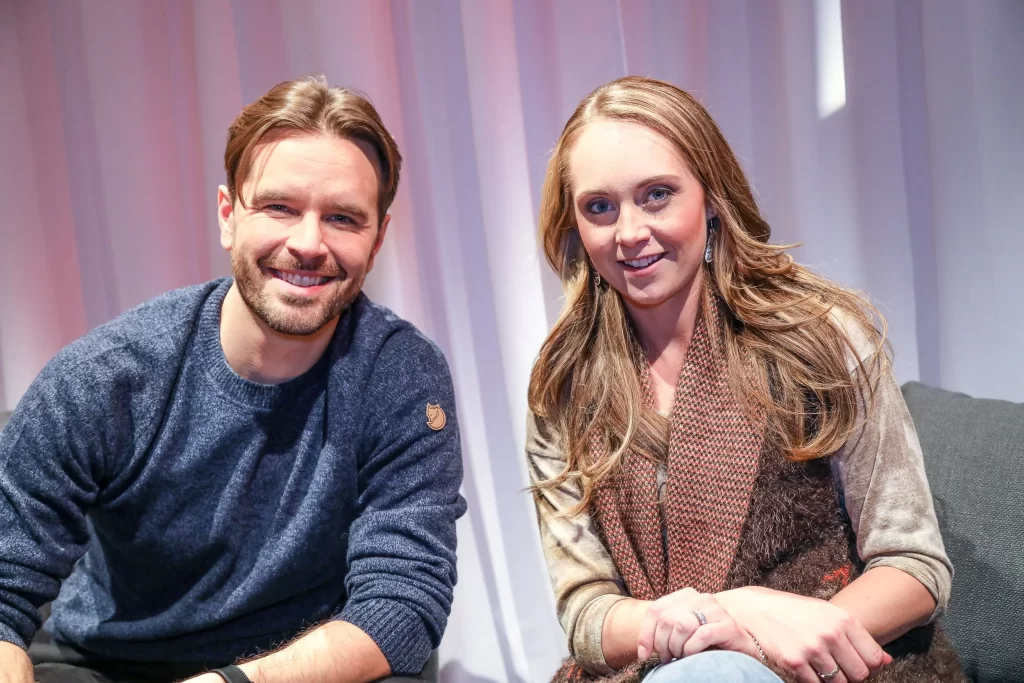
No discussion of Graham Wardle’s Heartland work is complete without acknowledging the professional relationship that was central to the show’s emotional success — his on-screen partnership with Amber Marshall, who plays Amy Fleming.
The Ty and Amy relationship is the beating heart of Heartland across fourteen seasons — a slow-burn romance that develops into a marriage and a family while navigating every kind of external and internal challenge the show’s writers could construct. It works as completely as it does because the two actors found a genuine working chemistry that translated consistently to the screen.
Their real-life friendship — warm, mutually respectful, and visible in how both have spoken about each other in interviews and on social media — clearly fed the on-screen dynamic. You cannot manufacture for fourteen seasons the kind of natural ease that Ty and Amy have in their best scenes. It requires two people who genuinely like and trust each other.
Amber Marshall has spoken about Graham’s departure from the show with evident sadness — not just professional loss but personal loss. The acknowledgment on both sides that fifteen years of working together creates a bond that transcends the professional context reflects something real about what sustained collaboration at that level actually means.
Ty Borden’s Death: The Scene That Broke a Million Hearts
When Season 14 of Heartland aired and Ty Borden died from complications related to the bacterial infection he had contracted in Mongolia, the fan reaction was immediate, global, and genuinely grief-stricken.
Heartland’s audience had spent fourteen years with Ty. They had watched him grow from a defensive, closed-off young man into a devoted husband and father. They had invested in the Ty and Amy relationship across a decade of storytelling. And then he was gone — not dramatically, not in a blaze of action-sequence heroism, but quietly, in a hospital, after a long fight against an illness that had seemed survivable.
The choice of how to kill Ty was itself a deliberate artistic decision — death from illness rather than accident or violence felt true to the show’s emotional register and to the character’s particular story. It was the kind of death that happens in real life, to real people, without warning or narrative preparation. That realism made it hit harder, not softer.
| Ty Borden’s Death — Key Details | Details |
|---|---|
| Season | Season 14, Episode 1 |
| Cause | Complications from bacterial infection (Mongolia) |
| Fan Reaction | Global grief; trending social media; widespread media coverage |
| Narrative Impact | Reshaped show’s entire subsequent direction |
| Graham’s Decision | Chose to leave; death was the writers’ solution |
| Amber Marshall’s Response | Publicly emotional; acknowledged the loss deeply |
The fan reaction generated genuine media coverage — not just in Canada but internationally. Social media in multiple languages expressed grief over a fictional character’s death with an intensity that reflected the depth of emotional investment Heartland’s audience had built over fourteen years.
Why He Left: Choosing Growth Over Comfort
The question that Heartland fans have asked most consistently since Graham Wardle’s departure is the obvious one — why?
He was at the centre of one of Canada’s most beloved television shows. The character he played was irreplaceable — as the show’s subsequent direction has demonstrated. The work was stable, respected, and clearly meaningful to an enormous audience. From the outside, leaving looked like one of the more counterintuitive decisions in Canadian television.
From the inside, Graham’s explanation is both simple and deeply considered.
He has spoken in multiple interviews and in his social media content about a growing awareness, in the years leading up to his departure, that his internal life and his professional life had diverged. The work was good. But it was not the work that reflected who he was becoming — a person increasingly oriented toward spirituality, creative exploration, photography, and the kind of intentional living that a long-running television schedule makes structurally difficult to pursue.
He has described the decision not as a rejection of Heartland or of acting but as an affirmation of something — a commitment to following the direction his life was actually moving rather than staying in a comfortable position that had stopped representing his truest self.
That framing — leaving toward something rather than away from something — is a distinction that reflects genuine self-awareness rather than post-hoc rationalisation.
Spirituality and Personal Growth: The Inner Journey Made Public
One of the most distinctive aspects of Graham Wardle’s public identity — particularly in his post-Heartland chapter — is his openness about spirituality, mindfulness, and intentional living.
In an entertainment world that tends to reward either secular celebrity culture or carefully managed inspirational messaging, Graham’s approach is more genuine and more specific than either. He talks about his spiritual journey not as a brand but as an actual lived reality — with the specificity and vulnerability that suggests someone working through something real rather than performing wellness for an audience.
He has explored various spiritual traditions and practices — meditation, mindfulness, the broader questions of meaning and purpose that organised religion addresses but that he engages with in a more personally constructed way. He has been open about the fact that leaving Heartland was partly a spiritual decision — a choice to align his outer life with his inner one rather than maintaining a comfortable professional structure that no longer reflected where he actually was.
This openness has resonated with an audience that was already emotionally connected to him through Heartland — fans who followed him out of the show and into this different kind of public conversation because the authenticity of his engagement was genuine enough to hold their attention.
Photography: The Second Creative Identity
If spirituality represents Graham Wardle’s inner journey made public, photography represents the creative language through which that journey finds its most consistent external expression.
His photography is immediately striking — technically accomplished, visually distinctive, and reflecting a genuine artistic perspective rather than the competent snapshotting of a celebrity with a good camera. He travels extensively, and the images he brings back from those travels carry the specific quality of someone who is genuinely looking at the world rather than simply documenting it.
| Graham Wardle’s Photography | Details |
|---|---|
| Style | Landscape, travel, portraiture; strong natural light work |
| Influence | Pacific Northwest upbringing; extensive travel |
| Platform | Instagram and dedicated photography channels |
| Quality | Professional standard; not celebrity hobby level |
| Subjects | Natural landscapes, people, spiritual and cultural locations |
| Reception | Strong following among both Heartland fans and photography community |
The photography work has given him a creative identity that exists independently of his acting career — something that belongs to him in a way that playing Ty Borden, however beautifully, never entirely could. When you play a character for fifteen years, the character inevitably becomes part of how the world sees you. The photography is purely Graham Wardle — his eye, his perspective, his relationship with the world expressed directly rather than through a fictional intermediary.
He has spoken about photography as a practice rather than simply a profession — something that keeps him present, observant, and connected to the world in ways that feed his broader spiritual and creative development.
Filmmaking and Creative Projects
Beyond photography, Graham has moved into filmmaking — directing and producing work that reflects the same creative sensibility as his photography while operating in a narrative medium that connects to his acting background.
His filmmaking work to date has been in the independent and short-form space — projects that prioritise creative vision over commercial scale and that reflect a filmmaker still developing his voice rather than one making big-budget productions. This is exactly where a filmmaker at his stage of development should be.
| Filmmaking Work | Details |
|---|---|
| Format | Short films; documentary work |
| Focus | Spiritual and personal growth themes |
| Approach | Independent; creative vision over commercial |
| Connection to Photography | Visual sensibility consistent across both forms |
| Future Direction | Longer-form projects in development |
The combination of acting experience, photographic eye, and genuine thematic interests in spirituality and human growth gives him a specific filmmaking perspective that has the potential to produce genuinely distinctive work as his skills in the director’s chair develop.
Marriage to Allison Wardle
Graham Wardle married Allison Wardle in 2015 — a relationship that he has spoken about with evident warmth and that provides the personal foundation from which his broader creative and spiritual life operates.
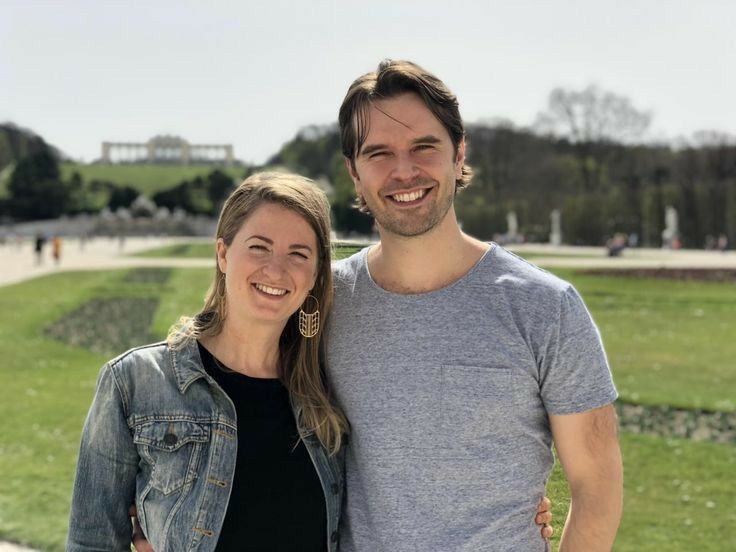
Allison maintains a significantly lower public profile than Graham — appearing in his social media content occasionally but not building a public identity of her own around his platform. That privacy is clearly a shared value rather than a reluctant concession, and it reflects the same intentional approach to living that Graham advocates more broadly.
| Graham and Allison Wardle | Details |
|---|---|
| Married | 2015 |
| Allison’s Public Profile | Low; private by choice |
| Shared Values | Privacy; intentional living; spirituality |
| Life Together | Travel; creative projects; personal growth |
| Public Presence | Occasional joint social media appearances |
Their life together — travel, creative projects, the ongoing work of building a shared existence that reflects genuine values rather than external expectations — is visible in glimpses through Graham’s social media in ways that feel authentic rather than performed. Two people building something real together, without needing to make it a spectacle.
Personal Philosophy and Mindfulness Advocacy
Graham Wardle’s public advocacy for mindfulness and intentional living has become an increasingly central part of his identity in the years since leaving Heartland — expressed through social media, speaking appearances, and various content projects that engage directly with these themes.
He approaches these topics with a credibility that comes from lived experience rather than theoretical endorsement. The decision to leave a stable, successful television career in pursuit of a more authentic life is not a small thing — it is precisely the kind of intentional choice that mindfulness philosophy advocates for in the abstract. Graham has actually done it, which gives his advocacy a weight that celebrity wellness messaging rarely carries.
His podcast work and speaking appearances have built an audience that extends beyond the Heartland fanbase — people drawn to his specific combination of practical experience, genuine reflection, and the particular kind of calm authority that comes from someone who has actually examined their own life and made difficult choices based on what they found.
Graham Wardle Today
As of 2025, Graham Wardle is in what appears to be one of the more genuinely fulfilling chapters of his professional and personal life — building creative work across photography and filmmaking, continuing to advocate for intentional living, and maintaining the connection with his Heartland audience that has never fully dissolved despite his departure from the show.
His social media presence — active across Instagram and other platforms — reflects a person engaged with the world in specific and genuine ways. He shares photography, travel experiences, reflections on personal growth, and occasional glimpses of his life with Allison in ways that feel like authentic self-expression rather than managed content production.
The Heartland audience that grieved Ty Borden’s death has largely followed Graham into this different chapter — drawn by the authenticity of what he is building and by the genuine personal connection that fifteen years of watching someone play a beloved character tends to create.
Legacy: What It All Means
Graham Wardle’s legacy operates on two levels that are worth distinguishing clearly.
The first is the Heartland legacy — fifteen years of playing one of Canadian television’s most beloved characters, contributing to a show that has outlasted most predictions for it and built a global audience of genuinely devoted fans. Ty Borden is a permanent part of Canadian television history, and Graham Wardle created him with a consistency and genuine craft that deserves to be acknowledged as serious artistic work.
The second is the personal legacy — the ongoing story of someone who chose authenticity over comfort at a professionally significant moment and has spent the years since building something that reflects who he actually is rather than who the television industry had defined him as.
| Graham Wardle’s Legacy | Details |
|---|---|
| Heartland Legacy | 14 seasons; Ty Borden — one of Canada’s beloved TV characters |
| Canadian TV History | Part of longest-running Canadian drama |
| Photography Legacy | Building genuine second creative identity |
| Personal Courage | Left successful show to pursue authentic life |
| Spiritual Advocacy | Genuine voice in mindfulness conversation |
| Fan Connection | Maintained audience loyalty through transition |
Frequently Asked Questions
1. Who is Graham Wardle? Graham Wardle is a Canadian actor and creative professional best known for playing Ty Borden in CBC’s Heartland across 14 seasons. He left the show in 2021 and now focuses on photography, filmmaking, and mindfulness advocacy.
2. Why did Graham Wardle leave Heartland? He left to pursue personal and spiritual growth and to focus on photography and filmmaking — a deliberate choice to align his professional life with who he had become rather than staying in a comfortable role that no longer reflected his direction.
3. How did Ty Borden die in Heartland? Ty died in Season 14 from complications of a bacterial infection contracted during a trip to Mongolia in Season 13. He passed away in hospital, leaving Amy a widow.
4. Is Graham Wardle married? Yes — he married Allison Wardle in 2015. Both maintain a private personal life.
5. What is Graham Wardle doing now? He is focused on photography, filmmaking, speaking, and mindfulness content — travelling extensively and building creative projects outside of acting.
6. What seasons was Graham Wardle in Heartland? He appeared in Seasons 1 through 14 — from the show’s premiere in 2007 through to his character’s death in 2021.
7. Does Graham Wardle have social media? Yes — he is active on Instagram and other platforms, sharing photography, travel content, and personal reflections on intentional living.
8. Will Graham Wardle return to acting? He has not ruled it out but has indicated his focus is currently on photography and filmmaking rather than returning to traditional acting roles.
Conclusion: The Courage of the Quieter Path
Graham Wardle could have stayed. Fifteen seasons in, with a character fans loved and a show that showed no signs of ending, staying was the safe choice — the comfortable, professionally logical, financially sensible choice.
He walked away anyway. Not dramatically. Not with public grievances or industry complaints. Just quietly, deliberately, with a clear sense of what he was walking toward rather than what he was leaving behind.
He went back to the natural world that Vancouver Island had given him an early relationship with. He picked up a camera. He pursued the spiritual questions that had been growing louder in him for years. He built a life with Allison that reflected genuine values rather than industry positioning.
And in doing so, he demonstrated something that the entertainment world occasionally produces but rarely celebrates — that the most interesting second act is not always a bigger role or a more prestigious show, but the genuine creative life that becomes possible when you stop performing for other people’s expectations and start building for your own.
Ty Borden was a great character. But the man who played him, and then walked away from him, and then built something entirely his own — that story has its own kind of quiet greatness.
