
Habiba Abdul-Jabbar — born Janice Brown in New York in October 1950 — is best known as the first wife of NBA Hall of Famer Kareem Abdul-Jabbar. She converted to Islam before their marriage in 1971, took the name Habiba, and went on to raise three children largely on her own after their divorce. Despite being connected to one of basketball’s greatest names, she has spent decades deliberately avoiding the spotlight — living quietly, building a small business, and letting her children carry the family legacy forward.
If you’ve searched for her wondering what happened after the marriage ended — she’s still here, still private, and still thriving on her own terms.
Who Is Habiba Abdul-Jabbar? — Quick Bio
| Detail | Information |
|---|---|
| Birth Name | Janice Brown |
| Date of Birth | October 1950 |
| Birthplace | New York, USA |
| Nationality | American |
| Religion (at birth) | Roman Catholic |
| Religion (later) | Islam |
| Known As | Habiba Abdul-Jabbar |
| Ex-Husband | Kareem Abdul-Jabbar |
| Marriage Date | May 28, 1971 |
| Divorce Filed | 1978 |
| Divorce Finalized | 1983 |
| Children | 3 (Habiba, Kareem Jr., Sultana) |
| Estimated Net Worth | $2 Million – $4 Million |
| Height | 5 ft 5 in (approx.) |
Early Life: Janice Brown Before the Name Change
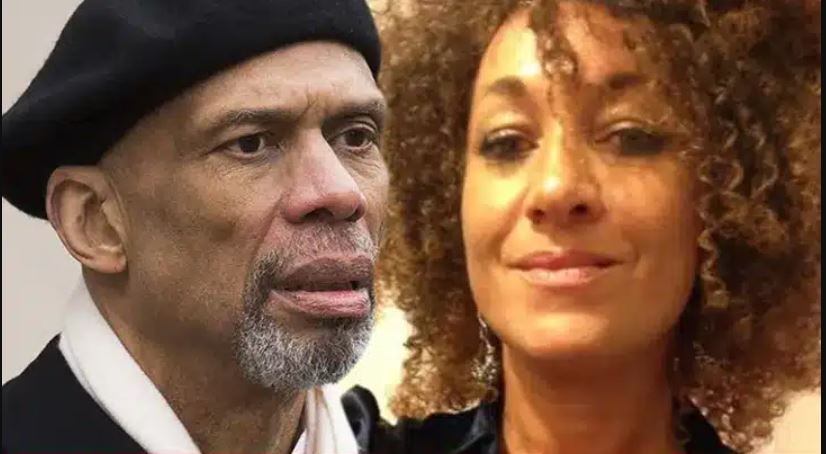
Not much is publicly documented about Habiba’s childhood — and that feels very on-brand for someone who has guarded her privacy so fiercely as an adult.
She was born Janice Brown in New York City in October 1950, raised in a Roman Catholic household. Her upbringing was ordinary by most accounts, far removed from the world of professional basketball and celebrity that would later define her public identity — however briefly.
The turning point came when she was introduced to Lew Alcindor — the towering UCLA basketball star who would later become Kareem Abdul-Jabbar — through a mutual friend named Cliff Anderson. The story goes that she was invited to a Lakers game, and that casual invitation set the wheels of a life-changing relationship in motion.
At that point, neither of them could have imagined just how complicated the road ahead would be.
The Marriage: A Union Shaped by Faith
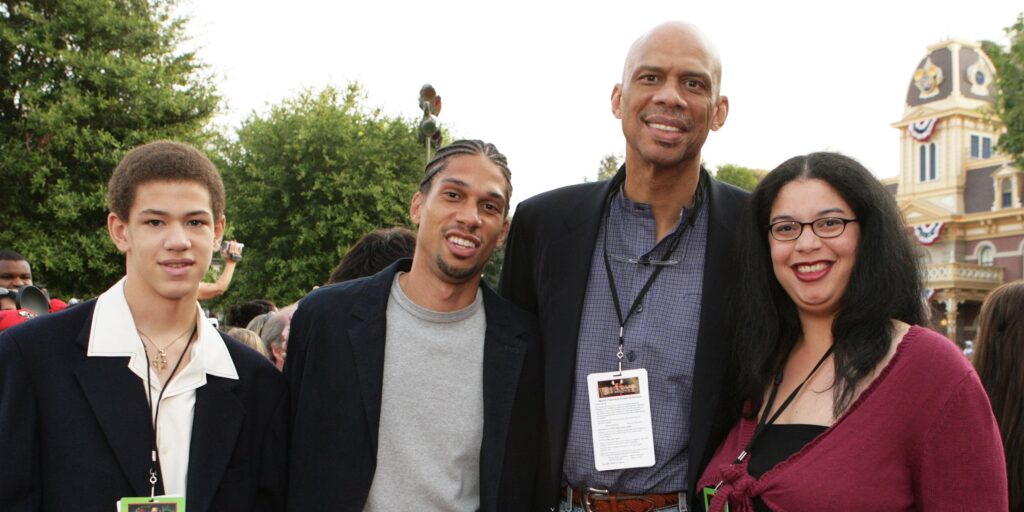
Habiba and Kareem married on May 28, 1971, in a ceremony held at a Washington D.C. mosque. The service was officiated by Hamaas Abdul-Khaalis, a leader of the Hanafi Muslim movement who had become a significant spiritual influence in Kareem’s life.
Before the wedding, Janice Brown converted to Islam and adopted the name Habiba — an Arabic word meaning “beloved.” It was a profound identity shift, one that would define her for the rest of her life — even long after the marriage ended.
But here’s where the story gets complicated, and painfully human.
Her Catholic parents were not permitted inside the mosque for the ceremony. They stood outside while their daughter exchanged vows. It’s a detail that speaks volumes — about the sacrifices Habiba made, about the cultural tensions at play, and about how much she was willing to give up for this relationship.
And it gets more complex. Kareem himself has admitted in interviews that at the time of their wedding, he had feelings for another woman. He married Habiba because his spiritual leader advised him to. That’s not a romantic foundation — it’s a fragile one.
Cracks in the Foundation
The marriage began unraveling relatively quickly. By December 1973 — just two and a half years in — the couple had stopped living together.
What happened? A few things converged at once.
Kareem met Cheryl Pistono, a woman who would eventually become his longtime partner and the mother of two of his other children. According to various accounts, Pistono reportedly encouraged Kareem to formally end the marriage with Habiba.
There’s another layer to this that makes it especially difficult: Habiba was pregnant with their third child, Sultana, at the time of the separation. She was carrying his child while the marriage was quietly falling apart around her.
To his credit, Kareem continued to visit Habiba and their eldest child during the estrangement. But the damage was done.
Divorce and Moving Forward
| Event | Year |
|---|---|
| Couple stops living together | 1973 |
| Divorce filed | 1978 |
| Divorce legally finalized | 1983 |
The divorce was filed in 1978 and took five years to be legally finalized — a drawn-out process that is common in high-profile separations involving asset disputes and child arrangements.
What stands out about Habiba’s response to all of this is what she didn’t do. She didn’t sell her story to tabloids. She didn’t seek revenge in the media. She didn’t position herself as a victim. She simply moved on — quietly, with dignity — and focused on raising her children.
That restraint, in the social media age especially, feels almost radical.
Her Children: The Proudest Chapter
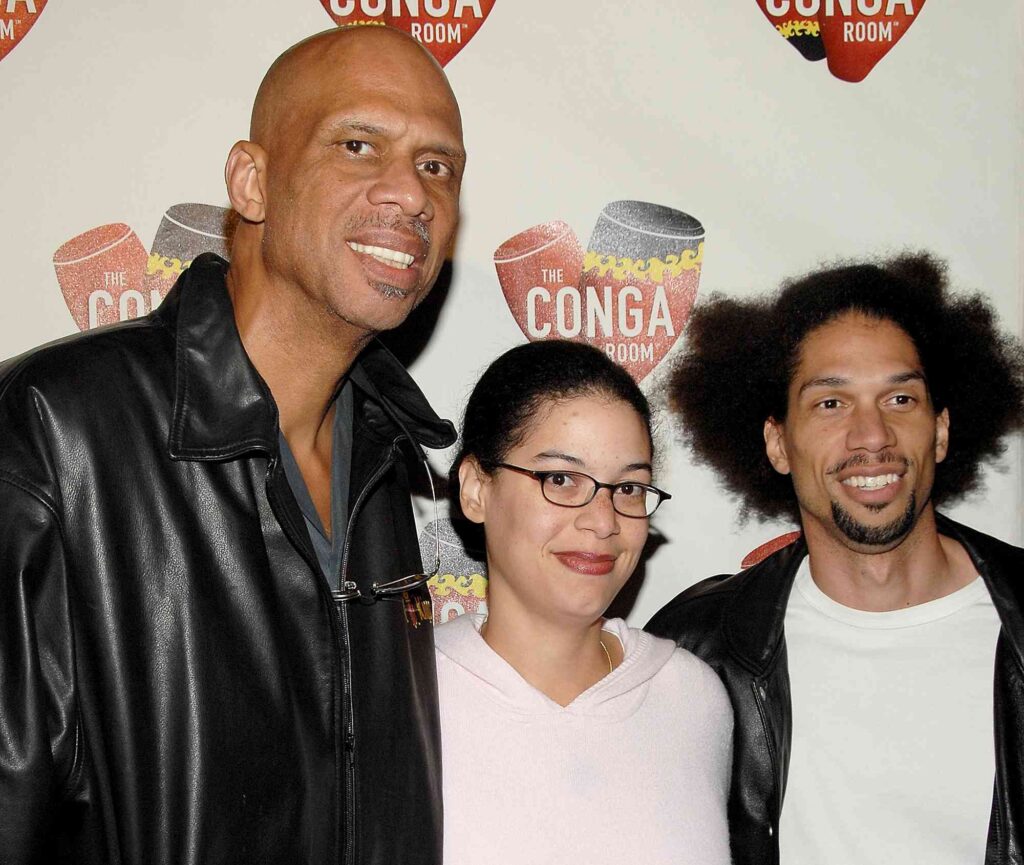
If there’s one area of Habiba’s life that she can point to with undeniable pride, it’s her children. All three have grown into accomplished, interesting adults.
| Child | Birth Year | Known For |
|---|---|---|
| Habiba Alcindor | 1972 | Journalist, documentary filmmaker, social activist |
| Kareem Abdul-Jabbar Jr. | 1976 | Basketball player, actor |
| Sultana Alcindor | 1979 | Studied Literature, works in administrative roles |
Habiba Alcindor (named after her mother) has perhaps made the most public mark. She works as a journalist and filmmaker — drawn to storytelling and social justice causes. There’s something poetic about a daughter of someone who stayed so silent becoming a professional voice for others.
Kareem Jr. carries his father’s name and athletic legacy. He played basketball professionally for a period and has also worked as an actor.
Sultana studied Literature and has stayed closer to the quieter, more private life that seems to be a family trait on her mother’s side.
All three children maintained relationships with both parents after the divorce — a sign that whatever pain existed, it didn’t poison the family bonds completely.
Life After Divorce: Building Something of Her Own
Here’s something most people don’t know about Habiba Abdul-Jabbar: she became an entrepreneur.
After the divorce, she launched a fashion brand called Tutu Glam — a line centered around colorful, flamboyant tutu skirts. It’s a cheerful, bold business choice from a woman who could have retreated entirely into obscurity.
She’s also an avid runner. She maintained a Facebook page called “RunHabibaRun” — a glimpse of personality from someone who rarely allows herself to be seen publicly. It suggests someone who found joy in physical challenge, in movement, in pushing forward. Metaphorically fitting, perhaps.
There are also reports — unconfirmed but widely cited — that she pursued studies in Creative Writing, possibly at Oberlin College. Whether true or not, it fits the image of a woman who has spent decades quietly cultivating herself rather than her public image.
Net Worth: A Comfortable, Modest Life
| Person | Estimated Net Worth |
|---|---|
| Habiba Abdul-Jabbar | $2 Million – $4 Million |
| Kareem Abdul-Jabbar (ex-husband) | ~$20 Million |
Habiba’s estimated net worth sits in the $2–4 million range. This likely reflects divorce settlements, her own business ventures, and a financially careful life.
She hasn’t chased wealth or celebrity. Her ex-husband, meanwhile, has remained wealthy and publicly active — writing books, making media appearances, and becoming a widely respected intellectual voice in American culture.
But Habiba has never seemed interested in competing with that narrative. Her life choices suggest someone who values peace over prominence.
Faith and Identity: What the Name “Habiba” Means
The Arabic name Habiba (حبيبة) translates to “beloved” or “darling.” It’s a name given with intention — a name that represents being cherished.
The irony isn’t lost that someone named “beloved” had a marriage where she was, by many accounts, not the first choice of her husband’s heart.
But Habiba’s embrace of Islam wasn’t purely about the marriage. She converted, took the name, changed her entire identity — and kept the name and the faith even after the divorce. That tells you something meaningful. It wasn’t performative. The faith became genuinely hers.
She gave up a great deal before that wedding — her birth name, her religion, her parents’ presence at her own ceremony. That kind of sacrifice deserves to be remembered with more than a footnote in Kareem Abdul-Jabbar’s biography.
Frequently Asked Questions
Where is Habiba Abdul-Jabbar now? She lives privately, away from public life. She has been involved in her fashion brand Tutu Glam and is known to be an active runner.
Did Habiba Abdul-Jabbar remarry? There is no confirmed public record of her remarrying after her divorce from Kareem was finalized in 1983.
How many children does Habiba have? She has three children: Habiba Alcindor (1972), Kareem Abdul-Jabbar Jr. (1976), and Sultana Alcindor (1979).
What is Habiba Abdul-Jabbar’s net worth? Her net worth is estimated to be between $2 million and $4 million.
Why did Habiba and Kareem divorce? The couple separated in 1973, with Kareem later becoming involved with Cheryl Pistono. The divorce was filed in 1978 and finalized in 1983.
What does the name Habiba mean? Habiba is an Arabic name meaning “beloved” or “darling.”
Final Thoughts: A Quiet Kind of Strength
Habiba Abdul-Jabbar’s story isn’t a tragedy — even if parts of it read like one.
Yes, she married a man who was in love with someone else. Yes, her parents stood outside her own wedding. Yes, she was pregnant when her marriage collapsed. These are hard facts.
But she didn’t let any of that define her permanently. She raised three children who became journalists, athletes, and thinkers. She built a business. She ran. She studied. She stayed private not because she had something to hide, but because she decided her life belonged to her — not to the public, not to celebrity culture, not to being an ex-wife footnote.
In a world that rewards people for oversharing, there’s something quietly radical about a woman who simply chose to live her life on her own terms — and did it well.
That’s who Habiba Abdul-Jabbar is. And that’s worth knowing.
