
Who Is Larry Bird?
Larry Bird is a retired NBA legend, three-time champion, three-time Most Valuable Player, and one of the greatest basketball players to ever set foot on a court. He spent his entire playing career with the Boston Celtics, retiring in 1992 as one of the most decorated players in league history.
The quick answer for anyone searching: Larry Bird is 68 years old, born in French Lick, Indiana, a small-town kid who became a Boston icon and changed the NBA forever. He won 3 championships, 3 MVP awards, made 12 All-Star teams, and later won Coach of the Year with the Indiana Pacers. Alongside Magic Johnson, he is credited with saving the NBA itself during one of its most critical eras.
Larry Bird — Quick Facts (Wiki Table)
| Detail | Info |
|---|---|
| Full Name | Larry Joe Bird |
| Date of Birth | December 7, 1956 |
| Age | 68 |
| Birthplace | West Baden Springs, Indiana |
| Raised In | French Lick, Indiana |
| Nationality | American |
| Height | 6 ft 9 in (2.06 m) |
| Weight | 220 lbs (100 kg) |
| Position | Small Forward |
| NBA Team | Boston Celtics (1979–1992) |
| Draft Year | 1978 NFL Draft, Round 1, Pick 6 |
| College | Indiana State University |
| Championships | 3 (1981, 1984, 1986) |
| NBA MVP Awards | 3 consecutive (1984, 1985, 1986) |
| Hall of Fame | Inducted 1998 |
| Wife | Dinah Mattingly (married 1989) |
| Estimated Net Worth | ~$75 Million |
Early Life — A Small Town Kid With Big Dreams
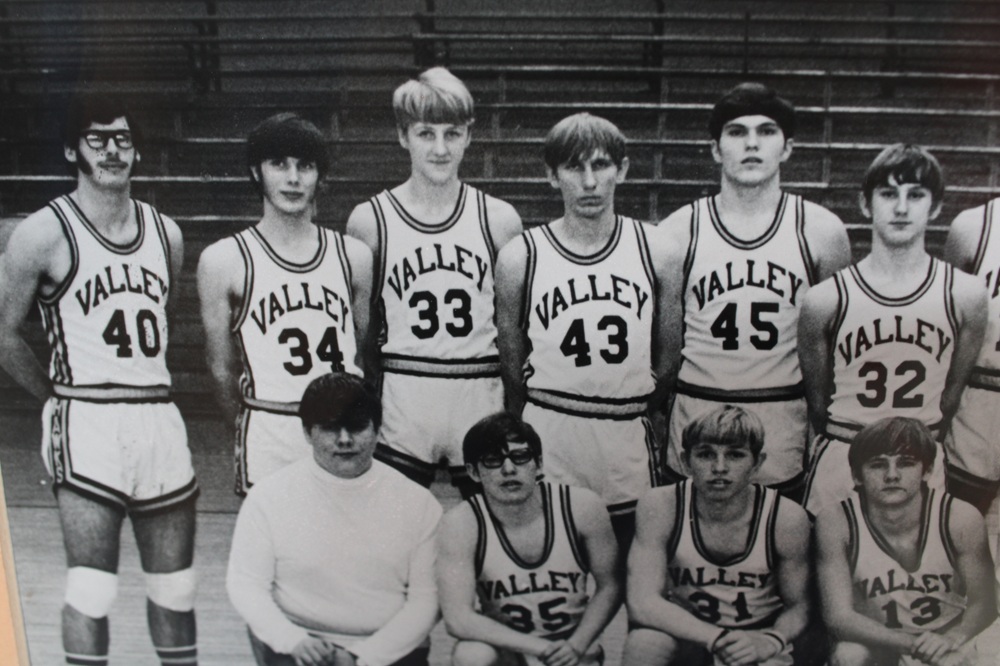
Larry Bird’s story doesn’t start in a gym. It starts in poverty.
He was born on December 7, 1956, in West Baden Springs, Indiana — a tiny town most Americans have never heard of. His family soon settled in nearby French Lick, a small working-class community where opportunities were limited and life was genuinely hard.
Larry was one of six children. His father, Claude Bird, was a Korean War veteran who struggled deeply with personal demons throughout his life. The family dealt with financial instability, and the household was defined as much by hardship as by anything else.
In 1975, Claude Bird took his own life. Larry was 18 years old.
That loss was devastating — and it never fully left him. Bird has spoken about his father’s death in rare moments of openness throughout his career. For a man known for emotional guardedness, the few times he addressed it revealed how deeply it shaped him.
Basketball, in many ways, was the escape. Not in a romantic, movie-script sense — but in a real, practical sense. When everything else was heavy, the court was where things made sense.
He played constantly. On outdoor courts, in gyms, alone, with anyone willing to show up. French Lick wasn’t producing NBA players. But Larry Bird was going to be different.
College Career — The Indiana State Sensation
The path to college wasn’t smooth either.
Bird initially enrolled at Indiana University in 1974 — home of the legendary Bobby Knight program. He lasted less than a month. The size of the campus overwhelmed him, he was homesick, and the environment felt completely foreign to a kid from a town of a few thousand people. He packed up and went home.
He spent time working — literally on a garbage truck in French Lick — before eventually enrolling at Indiana State University in Terre Haute in 1975.
What happened next was one of the most remarkable college basketball stories in history.
Bird transformed Indiana State from a program nobody talked about into a national phenomenon. By his senior season in 1978–79, he had the Sycamores ranked number one in the country and led them all the way to the NCAA Championship game.
That championship game — against Michigan State and a certain sophomore named Earvin “Magic” Johnson — drew the largest television audience in college basketball history at the time. Bird and Magic. The first chapter of a rivalry that would define a decade of professional basketball.
Indiana State lost that game. But the world had seen Larry Bird, and there was no going back.
Larry Bird — College Stats (Indiana State):
| Season | Games | PPG | RPG | APG |
|---|---|---|---|---|
| 1975–76 | 28 | 19.1 | 11.4 | 3.5 |
| 1976–77 | 32 | 32.8 | 13.3 | 4.4 |
| 1977–78 | 32 | 30.0 | 11.5 | 4.6 |
| 1978–79 | 34 | 28.6 | 14.9 | 5.5 |
Those numbers are staggering. He was the consensus National Player of the Year in 1979 and left Indiana State as one of the most decorated college players of his era.
NBA Draft & Arrival in Boston
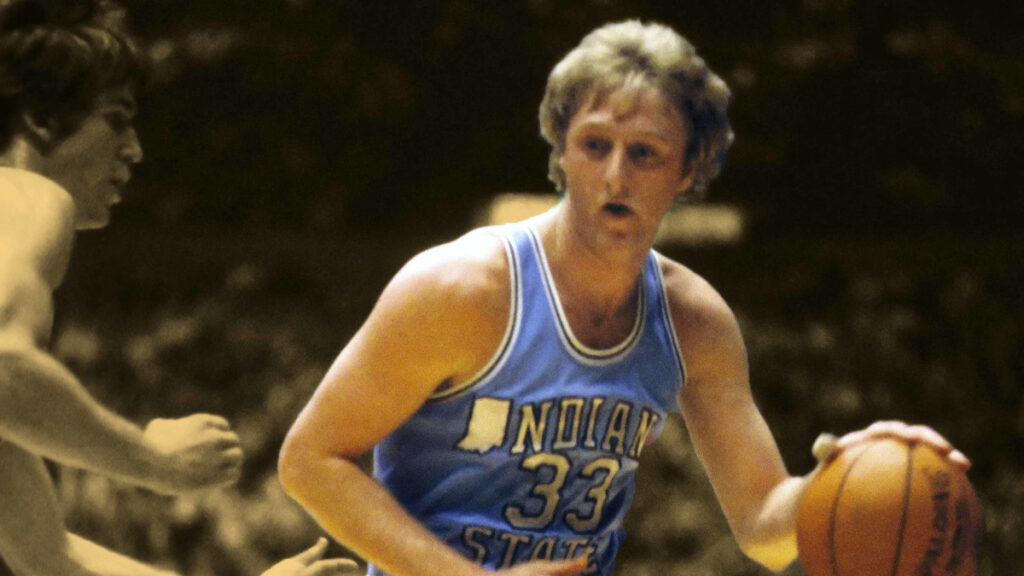
Here’s a detail that surprises many casual basketball fans: Larry Bird was actually drafted in 1978 — before his senior season at Indiana State.
The Boston Celtics, under the shrewd leadership of Red Auerbach, selected Bird with the 6th overall pick in the 1978 draft. They then waited a full year while he completed his senior season, knowing they had something special.
Bird signed with the Celtics in 1979, becoming the highest-paid rookie in NBA history at the time.
The impact was immediate.
In his very first season, Bird averaged 21.3 points, 10.4 rebounds, and 4.5 assists per game. The Celtics went from 29 wins the previous season to 61 wins. He won NBA Rookie of the Year without a moment’s hesitation.
Boston had found its cornerstone. The dynasty was about to begin.
The Celtics Dynasty — Championships & Dominance
The thirteen seasons Larry Bird spent in Boston represent one of the great runs in professional sports history.
He didn’t just play well. He won. Consistently, dramatically, and often in ways that defied logic.
The Three Championships
1981 — First Title Bird’s second season ended with an NBA Championship, defeating the Houston Rockets 4–2 in the Finals. At 24 years old, Bird already had a ring.
1984 — The Classic The 1984 NBA Finals between the Celtics and the Los Angeles Lakers is widely considered one of the greatest Finals ever played. Seven games, enormous tension, Bird vs Magic on the biggest stage. Boston won. Bird averaged 27.4 points, 14 rebounds, and 3.6 assists per game in that series. He was named Finals MVP.
1986 — The Peak The 1986 Celtics team is frequently cited as one of the greatest teams ever assembled. Bird was at the absolute peak of his powers. They dismantled the Houston Rockets 4–2 in the Finals. Bird won his third championship and was again named Finals MVP.
The MVP Streak
Between 1984 and 1986, Larry Bird won three consecutive NBA Most Valuable Player awards. Only two other players in league history have achieved that — Bill Russell and Wilt Chamberlain. That is the company Bird keeps.
Larry Bird — NBA Career Stats:
| Season | Team | GP | PPG | RPG | APG | FG% |
|---|---|---|---|---|---|---|
| 1979–80 | Boston | 82 | 21.3 | 10.4 | 4.5 | 47.4 |
| 1980–81 | Boston | 82 | 21.2 | 10.9 | 5.5 | 47.8 |
| 1981–82 | Boston | 77 | 22.9 | 11.0 | 5.8 | 50.3 |
| 1982–83 | Boston | 79 | 23.6 | 11.0 | 5.8 | 50.4 |
| 1983–84 | Boston | 79 | 24.2 | 10.1 | 6.6 | 49.2 |
| 1984–85 | Boston | 80 | 28.7 | 10.5 | 6.6 | 52.2 |
| 1985–86 | Boston | 82 | 25.8 | 9.8 | 6.8 | 49.6 |
| 1986–87 | Boston | 74 | 28.1 | 9.2 | 7.6 | 52.5 |
| 1987–88 | Boston | 76 | 29.9 | 9.3 | 6.1 | 52.7 |
| Career Avg | 897 | 24.3 | 10.0 | 6.3 | 49.6 |
Those career averages — 24.3 points, 10 rebounds, 6.3 assists — belong to an elite tier that very few players in NBA history have entered.
Playing Style — What Made Bird Different
Stats tell part of the story. They don’t tell all of it.
What separated Larry Bird wasn’t athleticism. By NBA standards, he was slow. He couldn’t jump particularly high. He wasn’t going to blow past anyone with pure speed.
What he had was something harder to measure and almost impossible to teach.
Basketball IQ. Bird saw the game several moves ahead. He understood angles, spacing, and defensive rotations at a level that made him feel like he was playing chess while everyone else played checkers.
Court vision. His passing was genuinely elite. A 6’9″ small forward averaging over 6 assists per game is remarkable. He could find teammates in positions they didn’t even know were open yet.
Clutch gene. The bigger the moment, the better Bird played. This wasn’t mythology — it was a pattern. Late games, elimination games, Game 7s — Bird consistently elevated when it mattered most.
The trash talk. This deserves its own category. Larry Bird was one of the most legendary trash talkers in NBA history — and the genius was that he backed every word up. Stories are endless. Telling opponents exactly what move he was going to make and then making it. Asking a defender which hand they’d prefer he score with. Walking into the three-point contest, looking at the other competitors, and asking “which one of you is finishing second?”
Work ethic that bordered on obsession. Bird was famous for arriving before anyone else and leaving after everyone. In French Lick, he had shot in gyms so cold in winter that his hands went numb. That foundation never left him.
The Bird vs Magic Rivalry — How They Saved the NBA
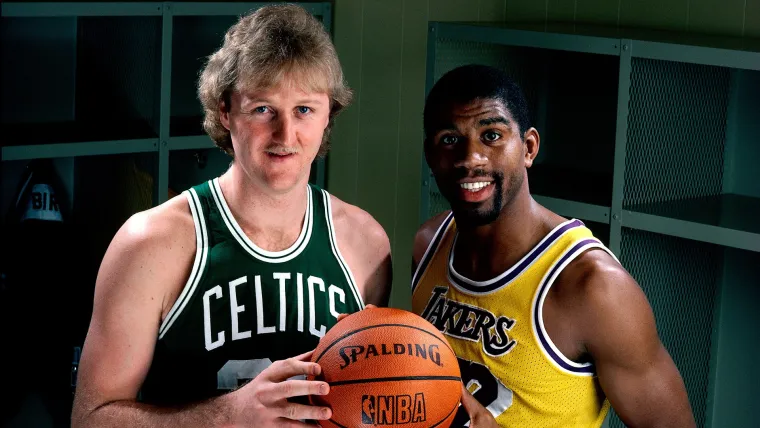
You cannot tell the story of Larry Bird without telling the story of Magic Johnson. And you cannot tell the story of the NBA in the 1980s without telling the story of both of them together.
Their rivalry began in that 1979 NCAA Championship game. It continued when Magic was drafted by the Lakers and Bird was in Boston. For the next decade, the two men defined professional basketball.
Before Bird and Magic, the NBA Finals were being shown on tape delay in some markets. The league had an image problem and a ratings problem. Within a few years of their arrivals, everything changed. Television ratings soared. Arenas sold out. The rivalry between the Boston Celtics and Los Angeles Lakers — Bird’s hard-nosed, blue-collar style versus Magic’s flashy, Showtime Lakers — became a cultural event.
The two met in the NBA Finals three times (1984, 1985, 1987). Bird won in 1984. Magic won in 1985 and 1987.
What’s often overlooked is the genuine respect — and eventually deep friendship — that developed between them. Two men who were each other’s greatest competition turned out to be each other’s greatest admirers. Their bond, documented most visibly in a 1992 Converse commercial and in the years since, is one of sport’s more genuine stories of rivalry becoming brotherhood.
Injuries & Retirement
The back problems started creeping in during the late 1980s and they never really left.
Bird played through pain that would have ended most careers earlier. Bone spurs in his heels required surgery. His back deteriorated to a point where getting off the floor after a fall became genuinely difficult. He had surgery on both heels in 1988 and missed significant time.
Through it all, he kept playing and kept producing at an elite level. But the body was sending signals that couldn’t be ignored forever.
Larry Bird retired in August 1992, at the age of 35. He had just helped lead the United States Dream Team to a gold medal at the Barcelona Olympics — a perfect final chapter to his playing career.
His number 33 was retired by the Boston Celtics. The Boston Garden crowd gave him the kind of sendoff reserved for once-in-a-generation players. Because that’s exactly what he was.
Coaching & Front Office Career
Retirement from playing didn’t mean retirement from basketball.
In 1997, Bird returned to the game as head coach of the Indiana Pacers — coming home to his home state. Almost nobody expected what came next.
In just his first season, Bird coached the Pacers to a 58-24 record. He won the NBA Coach of the Year award in 1998. A man who had never coached at any level before becoming an NBA head coach walked in and immediately won Coach of the Year. Only Larry Bird.
He coached the Pacers for three seasons (1997–2000), reaching the Eastern Conference Finals twice and the NBA Finals once in 2000, where Indiana fell to the Lakers.
He then stepped back before returning as President of Basketball Operations — a role in which he helped build and manage the Pacers’ roster for over a decade. He drafted Paul George, helped develop a genuine contender, and earned NBA Executive of the Year honors in 2012.
Larry Bird — Post-Playing Career:
| Role | Team | Years | Achievement |
|---|---|---|---|
| Head Coach | Indiana Pacers | 1997–2000 | Coach of the Year (1998), Finals appearance (2000) |
| President of Basketball Operations | Indiana Pacers | 2003–2012, 2013–2017 | Executive of the Year (2012) |
Larry Bird’s Personal Life — Wife & Family
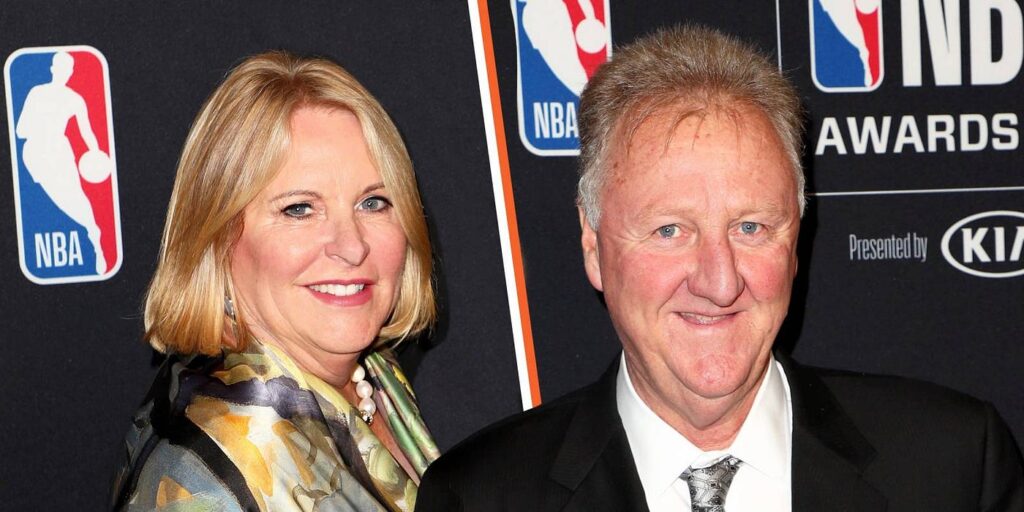
Larry Bird’s personal life has always been kept close to the chest. He is not a man who courts publicity off the court, and that’s been true throughout his adult life.
His first marriage was brief and ended in divorce. From that relationship came his daughter, Corrie Bird, whose existence Bird did not publicly acknowledge for many years — a complicated chapter of his personal history that he has since addressed with more openness.
The anchor of his personal life has been Dinah Mattingly, whom he married in 1989. Dinah has been his partner through the final years of his playing career, his coaching tenure, and his life in Indiana beyond basketball. Together they adopted two children — Conner and Mariah Bird.
By all accounts, Dinah has been a grounding, stabilizing presence in a life that could easily have been consumed by the noise of celebrity. Bird has spoken warmly about their relationship in the rare moments he opens up about his private world.
👉 For a full look at Larry Bird’s wife Dinah Mattingly — her background, their relationship, and family life — check out our dedicated article here [Larry Bird’s wife].
The Birds live in Naples, Florida, and maintain strong ties to Indiana — the state that made Larry Bird and the state he has never truly left behind.
Larry Bird’s Net Worth
Larry Bird accumulated wealth through a playing career, coaching contracts, front office salaries, and smart personal investments.
Earnings & Net Worth Breakdown:
| Source | Estimated Earnings |
|---|---|
| NBA Playing Career (1979–1992) | ~$24 Million total salary |
| Coaching Salary — Indiana Pacers | Several million over 3 seasons |
| Front Office — President of Ops | Multi-million annual salary |
| Endorsements (Converse, etc.) | Significant during playing days |
| Investments & Real Estate | Substantial |
| Estimated Total Net Worth | ~$75 Million |
By the standards of today’s NBA contracts, his playing salary looks modest. But Bird was the highest-paid player of his era at multiple points in his career, and the financial management of his post-playing life has been solid.
At $75 million, he is comfortably wealthy — though by all accounts, his lifestyle remains rooted in the modest, unpretentious values of French Lick, Indiana.
Larry Bird’s Legacy & Honors
The honors and accolades tell one part of the story.
| Honor | Year |
|---|---|
| NBA Rookie of the Year | 1980 |
| 3x NBA Champion | 1981, 1984, 1986 |
| 2x NBA Finals MVP | 1984, 1986 |
| 3x NBA MVP | 1984, 1985, 1986 |
| 12x NBA All-Star | 1980–1988, 1990–1992 |
| NBA All-Defensive Team | 3x |
| Basketball Hall of Fame | 1998 |
| NBA 50th Anniversary Team | 1996 |
| NBA 75th Anniversary Team | 2021 |
| Indiana State Jersey Retired | #33 |
| Boston Celtics Jersey Retired | #33 |
Being named to both the 50th and 75th Anniversary Teams — selected by panels of basketball experts across different eras — is about as definitive a statement as the sport can make about a player’s place in history.
Fun Facts & Lesser-Known Side of Larry Bird
He once worked on a garbage truck. Between leaving Indiana University and enrolling at Indiana State, Bird worked a municipal job in French Lick. That groundedness never left him.
The trash talk was legendary and calculated. Before the 1986 Three-Point Contest at All-Star Weekend, Bird walked into the locker room and reportedly asked the other competitors which one of them was finishing second. He then won the contest. That story has been told and retold because it captures exactly who he was — not arrogance, but supreme, earned confidence.
He hated the spotlight. For one of the most famous athletes of his era, Bird was remarkably uncomfortable with celebrity. He declined countless commercial opportunities, avoided Hollywood, and retreated to Indiana whenever possible.
His work ethic was almost pathological. Stories of Bird arriving at the Boston Garden at 5 AM for shooting practice before regular practice began are well-documented. In French Lick, he had shot through Indiana winters in gyms without adequate heating. That habit of extreme preparation defined his entire career.
He is genuinely funny. Bird’s dry, deadpan Indiana humor is one of the more underrated aspects of his personality. Interviews with him, especially from his coaching days, reveal a sharp wit that rarely gets mentioned alongside the championships and MVPs.
Magic Johnson called him the greatest player he ever played against. Coming from Magic Johnson — himself a top-five player in NBA history — that is about as high a compliment as the sport offers.
Conclusion — A Standard That Still Stands
Larry Bird is 68 years old now, largely retired from basketball’s front lines and living quietly in a way that suits him perfectly.
But his legacy doesn’t age. If anything, it grows.
Every conversation about the greatest players in NBA history circles back to Bird. Every discussion about basketball IQ, clutch performance, and elite competitiveness eventually lands on his name. Every young forward who studies the game watches his tape.
The kid from French Lick — the one who worked a garbage truck, played on frozen outdoor courts, walked away from Indiana University because it was too big, and had to fight for everything he ever got — became one of the two or three most important players in the history of professional basketball.
That’s not mythology. That’s just the record.
