
There is a particular kind of American story that begins with ambition, accelerates through excess, and ends in a prison cell — a story so perfectly structured in its rise and fall that it almost seems fictional. George Jung lived that story in real life, at a scale that genuinely defies imagination. At his peak, he was responsible for moving an estimated 85% of the cocaine entering the United States — a figure so staggering that it reads like a movie statistic rather than a documented historical reality. It was, eventually, a movie. But the reality behind it was considerably more complicated, more human, and more tragic than any screenplay could fully capture.
For readers looking for a quick answer — George Jacob Jung was an American drug trafficker born on August 6, 1942, in Boston, Massachusetts, who became the primary cocaine distributor for the Medellín Cartel in the United States during the 1970s and 1980s. Working alongside Carlos Lehder and Pablo Escobar, he built a smuggling operation that at its peak supplied an estimated 85% of America’s cocaine. He was portrayed by Johnny Depp in the 2001 film Blow. He died on May 5, 2021, at the age of 78, after spending the majority of his adult life in federal prison. His daughter Kristina Sunshine Jung was present at his death.
Quick Facts — Wiki Style
| Field | Details |
|---|---|
| Full Name | George Jacob Jung |
| Born | August 6, 1942 |
| Birthplace | Boston, Massachusetts, USA |
| Died | May 5, 2021 |
| Age at Death | 78 |
| Nationality | American |
| Known For | Primary US cocaine distributor for Medellín Cartel |
| Associates | Pablo Escobar, Carlos Lehder, Medellín Cartel |
| Daughter | Kristina Sunshine Jung |
| Portrayed By | Johnny Depp — Blow (2001) |
| Peak Operation | Estimated 85% of US cocaine supply |
| Total Prison Time | Majority of adult life in federal custody |
| Released | 2014 |
| Death | May 5, 2021 |
Early Life: Where It All Began
George Jacob Jung was born on August 6, 1942, in Boston, Massachusetts — and the circumstances of his upbringing contain, in miniature, almost everything that would eventually drive the decisions he made.
He grew up in Weymouth, Massachusetts — a working-class town south of Boston where the gap between ambition and opportunity was wide and visible. His father Frederick Jung was a hardworking man who ran a plumbing and heating business — the kind of honest, physical work that pays the bills without ever quite building the life that ambition imagines.
The business struggled. Money was consistently tight. George watched his father work hard and worry constantly — watched what honest labour actually produced for a family without capital, without connections, without the structural advantages that the American Dream pretended were available to everyone equally.
That observation planted something in him. Not a hatred of work — but a scepticism about whether honest work was actually the most efficient path to the life he wanted. He loved his father genuinely. He also decided, somewhere in those formative years, that he was going to find a different way.
His mother Ermine has been described in various accounts as materialistic and status-conscious in ways that amplified George’s own desires for wealth and recognition. Whether that characterisation is fair is debatable — but the combination of a financially struggling household and a clear awareness of what money could provide created the psychological conditions for everything that followed.
He was bright, charming, and socially fluid — able to move between different worlds with an ease that would later make him an effective criminal operator. These were not the qualities of someone who was going to disappear quietly into a conventional life.
College and the First Exposure
George Jung attended the University of Southern Mississippi — a choice driven more by geography and circumstance than academic passion. He was not, by his own account, primarily interested in formal education. He was interested in the world that college opened up — the social networks, the cultural exposure, the proximity to people whose lives looked different from the one he had grown up watching.
It was during his college years that he first encountered marijuana — and more importantly, first encountered the economic reality of marijuana in the early 1960s. The drug was cheap to acquire, expensive to sell in the right markets, and the legal consequences, while real, were manageable compared to what they would later become.
He moved to California — specifically to the Malibu area — where the counter-culture of the mid-1960s was generating both a massive demand for marijuana and a social environment in which the normal rules of economic behaviour felt suspended. The beach communities of Southern California were, in the 1960s, a genuinely different world from Weymouth, Massachusetts — and George Jung found he fit there more naturally than anywhere he had been before.
He began dealing marijuana. Small scale at first — the ordinary commerce of the counter-culture. Then larger. Then considerably larger.
The Marijuana Years: Building the Foundation
By the late 1960s, George Jung had transformed himself from a small-time dealer into a genuinely significant marijuana smuggler — building an operation that moved product from Mexico into the wealthy communities of Cape Cod, Massachusetts and Southern California.
The operation worked through a combination of personal connections, small aircraft, and the kind of logistical creativity that would later characterise his cocaine work at a much larger scale. He identified a simple market inefficiency — marijuana was abundant and cheap in Mexico, scarce and expensive in wealthy American communities — and built a business around closing that gap.
The money was real and it came quickly. For the first time in his life, George Jung was making the kind of money he had grown up watching his father unable to make — and making it with a freedom and excitement that honest plumbing work could never provide.
The operation eventually attracted law enforcement attention.
His first arrest came in 1974 — a marijuana-related charge that resulted in a sentence at Danbury Federal Correctional Institution in Connecticut. It was a significant setback. It was also, as it turned out, the most consequential thing that ever happened to him — because of who he met inside.
Danbury Prison: Where Everything Changed
Danbury Federal Correctional Institution in 1974 was not a maximum security facility. It housed a relatively mixed population of federal offenders — white-collar criminals, drug offenders, and various other federal cases. The social atmosphere was, by the standards of the federal prison system, relatively relaxed.
George Jung arrived as a marijuana smuggler with genuine operational experience and street credibility. He was placed in proximity to a man who would change the entire trajectory of his criminal career.
Carlos Lehder was a Colombian-German car thief and small-time criminal who had arrived at Danbury on a relatively minor charge. He was charismatic, intensely intelligent, politically radical — a man with enormous ambitions and a specific vision for how those ambitions could be realised.
Lehder had connections to Colombia. He had ideas about cocaine — specifically about the logistics of moving cocaine from Colombia to the United States at scale. What he lacked was someone with actual American drug distribution experience, American market knowledge, and the operational infrastructure to move product once it arrived.
George Jung had all of those things.
| The Danbury Partnership | Details |
|---|---|
| Where | Danbury Federal Correctional Institution, Connecticut |
| When | 1974 |
| George’s Background | Marijuana smuggling; US distribution network |
| Lehder’s Background | Colombian connections; cocaine supply access |
| What They Built | Complementary skill sets that created a complete operation |
| Result | The foundation of the most significant cocaine pipeline in US history |
The conversations that happened between Jung and Lehder in that Connecticut prison facility contributed directly to a cocaine epidemic that would define American society for the following two decades. Prison, in this case, functioned not as rehabilitation but as a remarkably effective business school.
The Medellín Cartel Connection
Through Carlos Lehder’s Colombian connections, George Jung was eventually introduced to the infrastructure of what would become the Medellín Cartel — and ultimately to its most powerful figure, Pablo Escobar.
Escobar was, at the time of Jung’s first dealings with him, already building the operation that would make him the most powerful and most feared criminal in the world. He had cocaine in abundance — produced in Colombia at minimal cost. What he needed was distribution in the United States — a market where the same cocaine could be sold at extraordinary profit margins.
George Jung became the primary bridge between the Colombian supply and the American market.
The operation worked through a network of small aircraft — initially single-engine planes, eventually larger cargo aircraft — that flew cocaine from Colombia to the United States through a series of intermediate stops and airstrips. Jung’s aviation experience from his marijuana smuggling days made him a natural fit for the logistics.
| The Cocaine Pipeline — Operation Details | Details |
|---|---|
| Supply Source | Pablo Escobar / Medellín Cartel — Colombia |
| Distribution | George Jung — United States |
| Transport Method | Small aircraft; later larger cargo planes |
| Entry Points | Various airstrips; Bahamas as intermediate hub |
| Peak Volume | Estimated 85% of US cocaine supply |
| Financial Scale | Hundreds of millions of dollars |
| Period | Late 1970s through mid-1980s |
| US Distribution | Florida, California, East Coast markets |
The Bahamas became a crucial intermediate hub — Carlos Lehder effectively took control of Norman’s Cay, a small Bahamian island that he turned into a private airstrip and staging point for cocaine shipments. It was one of the most audacious pieces of criminal infrastructure in the history of the drug trade — an entire island operating as a cocaine transit facility.
At the operation’s peak, Jung and his associates were moving cocaine in quantities that had never been seen before in the American market. The supply was so significant and so consistent that it drove the price of cocaine down dramatically — transforming what had been a luxury drug of the wealthy into something available across economic demographics.
That price democratisation of cocaine had catastrophic consequences for American society — consequences that George Jung has acknowledged with something that reads as genuine regret in his later interviews.
Pablo Escobar: The Most Dangerous Partnership
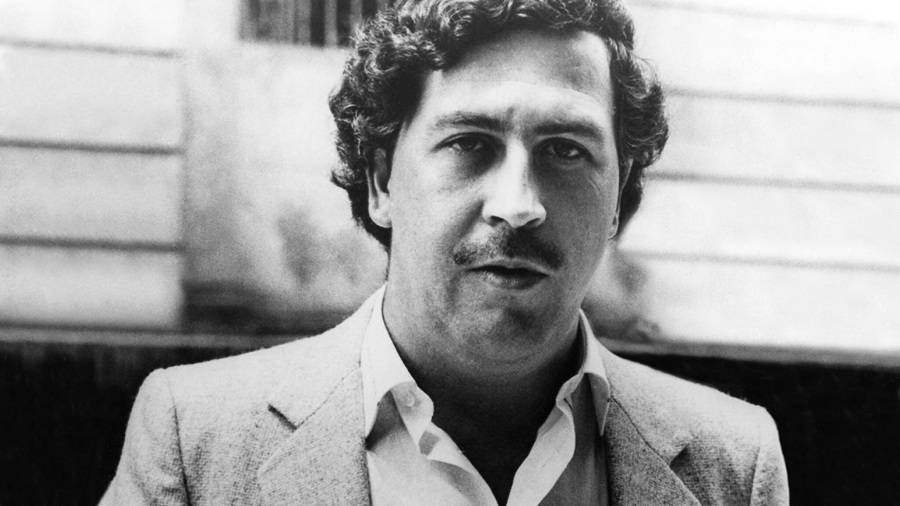
Working with Pablo Escobar meant working with someone who operated by a completely different set of rules than anything George Jung had previously encountered.
Escobar was not simply a criminal. He was a criminal with genuine political ambitions, enormous personal charisma, and an absolute willingness to use violence as a business tool in ways that American drug operators of Jung’s generation had no real framework for understanding.
He was also, in the early years of their working relationship, an extraordinarily effective business partner. The product was good. The supply was consistent. The financial arrangements were honoured. George Jung was making more money than he had ever imagined — the kind of money that stops feeling real because no individual human being can actually process what hundreds of millions of dollars means in practical terms.
What Jung eventually discovered — as others in Escobar’s orbit discovered before and after him — was that the relationship was entirely on Escobar’s terms. The partnership that had made Jung extraordinarily wealthy could be ended whenever Escobar decided it should be ended.
The betrayal came gradually. Escobar and Lehder began building their own American distribution networks — using the contacts and infrastructure that Jung had helped develop — and progressively cutting Jung out of the operation. The man who had been essential to establishing the pipeline found himself increasingly peripheral to it.
It was a lesson in the fundamental nature of criminal enterprise — there are no contracts, no courts, no recourse when a partner decides you are no longer useful. George Jung had built something enormous and lost control of it to people who had always been more ruthless than he was.
The Legal Timeline: Arrests, Escapes, and Final Reckoning
George Jung’s legal history is a catalogue of arrests, imprisonments, and — on at least one occasion — escape, that spans decades and reflects both the scale of his criminal operation and the eventual inevitability of its collapse.
| George Jung — Legal Timeline | Details |
|---|---|
| 1974 | First major arrest — marijuana smuggling; sentenced to Danbury |
| 1976 | Released from Danbury — meets Carlos Lehder |
| 1981 | Arrested in South Carolina — cocaine possession |
| 1981 | Escaped from halfway house |
| 1981 | Re-arrested in Eastham, Massachusetts |
| 1984 | Released |
| 1987 | Arrested again — continued drug activity |
| 1994 | Final major arrest — cocaine conspiracy; sentenced to 60 years |
| 1994–2014 | Federal imprisonment |
| 2014 | Released — served approximately 20 years |
| 2021 | Died — May 5, in Weymouth, Massachusetts |
The 1994 arrest was the final and most consequential. He was convicted on cocaine conspiracy charges and sentenced to 60 years in federal prison — a sentence that was subsequently reduced to approximately 20 years through various legal mechanisms, resulting in his release in 2014.
The escape from a halfway house in 1981 — a period where he walked away from a minimum-security facility and returned briefly to drug trafficking — reflects the particular psychology of someone whose entire adult identity had been built around operating outside institutional constraints. The halfway house represented exactly the kind of legitimate, structured, supervised existence that George Jung had spent his entire life avoiding.
He couldn’t do it. He walked out. And eventually they brought him back.
Kristina Sunshine Jung: The Daughter He Failed
In any accounting of George Jung’s life, the most painful chapter is not the imprisonment or the betrayal by Escobar or the loss of the money. It is his relationship with his daughter Kristina Sunshine Jung — a relationship that encapsulates everything that was tragic about the choices he made.
Kristina was born to George and his wife Mirtha Jung — herself a significant figure in the drug operation who was arrested and imprisoned for her own involvement in the trade. Kristina grew up with both parents either absent through imprisonment or present but consumed by a life that had no stable space for a child.
Her childhood, by her own account, was marked by the particular damage that comes from loving a parent who consistently chooses everything else over you — not because they don’t love you, but because they are so completely consumed by their own world that the love doesn’t translate into presence or reliability.
| Kristina Sunshine Jung | Details |
|---|---|
| Full Name | Kristina Sunshine Jung |
| Parents | George Jung and Mirtha Jung |
| Childhood | Largely absent father due to imprisonment |
| Relationship with George | Complicated; loving but marked by his absence |
| Public Profile | Has spoken publicly about her father |
| At His Death | Present when George died — May 5, 2021 |
| Portrayed In | Blow (2001) — played by various child actors |
George Jung spoke about Kristina with evident pain in his later years and interviews — acknowledging that the relationship represented his most significant failure. The money was gone. The operation was gone. The years of his life were gone. But the damage to his relationship with his daughter was the cost he returned to most consistently when reflecting on what the choices had actually meant.
Kristina was present when her father died in May 2021 — a detail that suggests whatever complicated journey their relationship had taken, it had arrived at a place of genuine connection in his final years.
That reconciliation — partial, imperfect, arrived at very late — is one of the more quietly human moments in a story that is otherwise operatic in its scale.
His Wives and Relationships
George Jung’s personal life was as turbulent as his criminal career — shaped by relationships that were simultaneously genuine and completely unsustainable given the circumstances in which they existed.
His first significant relationship was with Barbara Pacheco — a woman he loved deeply and who died of cystic fibrosis in 1974. Her death was a devastating loss that, by Jung’s own account, contributed to the recklessness with which he threw himself into criminal activity in the years that followed. Grief, in his telling, became fuel for risk-taking.
His marriage to Mirtha Jung — a Colombian woman who became actively involved in the drug trade alongside him — produced Kristina and eventually produced a mutual imprisonment as both were arrested for their activities. Mirtha served time in federal prison and later divorced George.
| George Jung’s Relationships | Details |
|---|---|
| Barbara Pacheco | First love; died of cystic fibrosis 1974 |
| Mirtha Jung | Wife; actively involved in drug trade; arrested; divorced |
| Daughter Kristina | From marriage to Mirtha; complicated lifelong relationship |
| Later Relationships | Various; none publicly significant |
The Mirtha chapter of his life is particularly complicated — here was a woman who chose to participate in the drug trade alongside her husband, was arrested and imprisoned for that participation, and whose daughter grew up with both parents absent simultaneously. The human cost of that particular configuration of choices is visible in everything Kristina has said publicly about her childhood.
Blow (2001): Hollywood Immortality
In 2001, director Ted Demme released Blow — a biographical crime drama based on journalist Bruce Porter’s book about George Jung’s life. The film starred Johnny Depp as George Jung and Penélope Cruz as Mirtha Jung.
The film transformed George Jung from a relatively obscure historical criminal figure into a genuine cultural icon — giving his story the aesthetic treatment and dramatic architecture that made it accessible and compelling to audiences who had no direct connection to the drug culture of the 1970s and 1980s.
| Blow (2001) — Key Facts | Details |
|---|---|
| Director | Ted Demme |
| George Jung | Johnny Depp |
| Mirtha Jung | Penélope Cruz |
| Young Kristina | Emma Roberts (film debut) |
| Based On | Blow: How a Small-Town Boy Made $100 Million with the Medellín Cocaine Cartel by Bruce Porter |
| Budget | $53 million |
| Box Office | $53 million worldwide |
| Release Date | April 6, 2001 |
| George’s Reaction | Mixed; appreciated the portrayal; noted inaccuracies |
Johnny Depp’s performance as Jung was one of the actor’s most committed and nuanced of the period — capturing both the charm that made Jung effective as a criminal operator and the fundamental sadness of someone who consistently chose the wrong things for understandable reasons. Depp spent time with Jung before filming — developing a personal connection that informed the performance’s emotional authenticity.
Emma Roberts — niece of Julia Roberts — made her film debut as young Kristina Jung in the film. It was a small role but a visible one in a commercially significant production.
George Jung’s reaction to the film was characteristically complicated. He appreciated the attention it brought to his story and the quality of Depp’s portrayal. He noted specific inaccuracies — moments where the dramatic requirements of the narrative had overridden historical precision. He was also, reportedly, disappointed that the film’s commercial success did not translate into financial benefit for him — a consequence of legal arrangements around the rights to his story.
The film’s final scene — where an aged, imprisoned George Jung imagines Kristina visiting him in prison, only for the visitor to be a guard — is one of American cinema’s more quietly devastating endings. Whether it reflects actual events or dramatic invention, it captures something emotionally true about what Jung’s choices had cost him.
Life After Prison: The Free Man
George Jung was released from federal prison in 2014 — at the age of 71, after serving approximately 20 years on his final sentence. He emerged into a world that had been transformed by the internet, by smartphones, by cultural changes that the man who had walked in during the 1990s had not fully witnessed in real time.
He adapted to that world with a surprisingly effective social media presence — maintaining an Instagram account that attracted hundreds of thousands of followers drawn by the combination of genuine historical notoriety and a personality that retained its charm and directness in old age.
His posts were a mixture of personal reflections, photographs, and the occasional piece of genuinely sharp commentary on his own life and legacy. He engaged with followers who found his story through Blow and who approached him with a mixture of fascination and something that occasionally veered toward romanticisation — which he sometimes pushed back against and sometimes seemed to accept with complicated feelings.
He made public appearances — interviews, podcasts, the occasional event — and spoke about his life with a combination of pride in what he had built and genuine acknowledgment of the cost. He was not, in his later years, a man in denial about what his choices had produced. He was a man trying to make some kind of sense of a life that had been genuinely extraordinary and genuinely destructive in equal measure.
Final Years and Death
By 2021, George Jung’s health had deteriorated significantly. He was 78 years old, a lifetime of stress, imprisonment, and the ordinary physical decline of old age having accumulated to a point where recovery was no longer a realistic expectation.
He spent his final days in Weymouth, Massachusetts — the same working-class town where he had grown up watching his father struggle with bills and ambition and the gap between the two. The symmetry of ending where he had started was not lost on observers of his story.
His daughter Kristina was with him when he died on May 5, 2021. The date — coincidentally the same birthday as his son Sage would have been had Sage been his child — is a detail that the numerically inclined have noted without any particular significance beyond the coincidence.
Kristina posted about her father’s death on social media with a combination of grief and love that reflected the complicated truth of their relationship — a daughter mourning a father who had failed her consistently and loved her genuinely, simultaneously, across an entire lifetime.
The public reaction to George Jung’s death reflected the strange cultural position he occupied — a real person who had caused genuine harm, whose story had been transformed by Hollywood into something that generated complicated sympathy, and whose personal charm had in his later years created a genuine connection with people who had never met him.
Legacy: The American Dream’s Dark Mirror
George Jung’s legacy is one of the more uncomfortable ones in American criminal history — because his story generates sympathy that it probably shouldn’t, and that sympathy reveals something true about the culture that produces it.
He grew up in a country that told him success was available to anyone willing to work hard enough for it. He watched his father work hard and struggle anyway. He chose a different path — one that produced the success his legitimate world had promised and failed to deliver, at a cost that took decades to become fully apparent.
The cocaine he moved didn’t stay abstract. It entered communities, destroyed families, fuelled addiction, contributed to violence, and left a trail of human damage that is impossible to quantify. George Jung, in his later years, acknowledged this — not always with the full weight of accountability that might be expected, but with enough recognition to suggest he understood what the ledger actually showed.
| George Jung’s Legacy | Details |
|---|---|
| Criminal Legacy | Most significant cocaine smuggler in US history |
| Cultural Legacy | Blow made him a cultural icon |
| Historical Significance | Directly contributed to US cocaine epidemic |
| Personal Legacy | Failed father; complicated reconciliation with Kristina |
| Social Media Legacy | Built genuine following in final years |
| Cautionary Tale | Most complete example of criminal American Dream narrative |
| Human Cost | Decades in prison; relationships destroyed; daughter damaged |
The film Blow gave his story a narrative architecture that makes the sympathy feel earned — the lonely old man in the prison, the daughter who doesn’t come, the life that burned bright and fast and ended in fluorescent-lit regret. But the story behind the film is messier and more human than that — which makes it, ultimately, more interesting.
Why George Jung’s Story Matters
George Jung’s story matters because it is not, at its core, a story about drugs. It is a story about the gap between the promise of the American Dream and the reality available to the people who believe in it most completely.
He wanted what his culture told him he should want — money, freedom, status, the ability to provide in ways his father couldn’t. He found a way to get those things that his culture had failed to make available through legitimate means. And he spent the rest of his life paying the price for that choice in the only currency that actually matters — time, relationships, and the ordinary pleasures of a life lived without the constant threat of arrest.
The cocaine trade he participated in caused genuine harm. That harm deserves acknowledgment. But so does the human story underneath the criminal one — the kid from Weymouth who wanted something better and made catastrophically wrong choices in pursuit of it.
Both things are true. And the tension between them is what makes his story impossible to look away from.
Frequently Asked Questions
1. Who was George Jung? George Jacob Jung was an American drug trafficker who became the primary cocaine distributor for the Medellín Cartel in the United States during the 1970s and 1980s. At his peak, his operation supplied an estimated 85% of America’s cocaine. He was portrayed by Johnny Depp in the 2001 film Blow and died on May 5, 2021, at age 78.
2. How much cocaine did George Jung smuggle? At the height of his operation, Jung and his associates were responsible for supplying an estimated 85% of the cocaine entering the United States — a figure that reflects both the scale of the Medellín Cartel’s production and the effectiveness of the distribution network Jung helped build.
3. Who was George Jung’s partner in the cocaine trade? His primary criminal partner was Carlos Lehder — a Colombian-German criminal he met at Danbury Federal Prison in 1974. Together they built the distribution network that connected Pablo Escobar and the Medellín Cartel to American markets.
4. What is the film Blow about? Blow (2001) is a biographical crime drama directed by Ted Demme, starring Johnny Depp as George Jung and Penélope Cruz as his wife Mirtha. It follows Jung’s rise from small-time marijuana dealer to America’s most significant cocaine smuggler and his eventual imprisonment.
5. Who is Kristina Sunshine Jung? Kristina Sunshine Jung is George Jung’s daughter — born to George and his wife Mirtha Jung. She grew up largely without her father due to his imprisonment and has spoken publicly about the complicated experience of loving an absent criminal parent. She was present when George died in May 2021.
6. How long did George Jung spend in prison? George Jung spent the majority of his adult life in federal custody across multiple sentences. His final sentence — received in 1994 on cocaine conspiracy charges — was 60 years, subsequently reduced. He was released in 2014 after serving approximately 20 years.
7. What happened to George Jung after prison? After his release in 2014, Jung maintained a social media presence, gave interviews, and made public appearances — building a genuine following among people who discovered his story through Blow. His health declined in his final years and he died in Weymouth, Massachusetts on May 5, 2021.
8. Was George Jung connected to Pablo Escobar? Yes — through his partnership with Carlos Lehder, Jung became directly connected to Pablo Escobar and the Medellín Cartel, serving as their primary US distribution contact. He was eventually cut out of the operation as Escobar built his own independent American distribution networks.
Conclusion: The Cost of Going All In
George Jung wanted the American Dream badly enough to build a criminal empire pursuing it. He got the money — more of it than most people see in a lifetime, arriving faster than he could meaningfully spend it. He got the freedom — the particular intoxicating freedom of operating outside every rule and structure that had constrained his father’s life. He got the lifestyle, the power, the status.
And then he spent twenty years in federal prison, lost his daughter’s childhood, watched his partners betray him and his operation collapse, and died in the same working-class Massachusetts town he had spent his entire life trying to escape.
The money was gone. The cocaine was gone. Pablo Escobar was gone — shot dead on a Medellín rooftop in 1993. Carlos Lehder was in prison. The operation that had once supplied 85% of America’s cocaine was a historical footnote.
What remained, at the end, was a daughter who had come back anyway. A story that a Hollywood film had turned into something that generates sympathy it probably only partially deserves. And a life that was, by any honest accounting, a cautionary tale about the distance between wanting something badly and choosing wisely in pursuit of it.
George Jung went all in. He lost everything. He knew it. And in his final years, he talked about it with the particular clarity of someone who has had two decades of a prison cell to think about exactly where things went wrong.
That clarity — hard-won, too late, genuinely felt — is the most human thing about him.
